


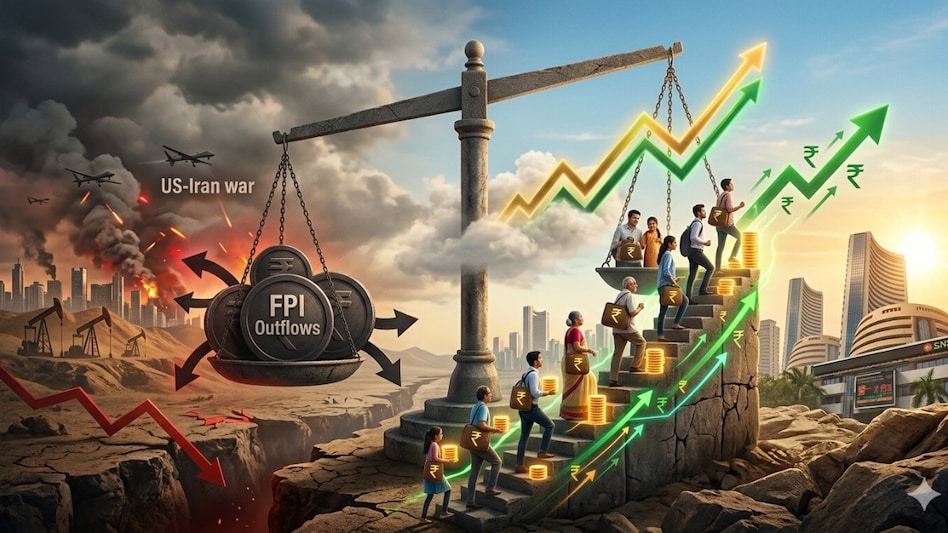
 Weekly outflows from India-focused funds have dropped significantly—from a peak of $1.2 billion to around $180 million.
India has recorded its first sign of relief in foreign portfolio investor (FPI) flows after weeks of sustained selling, but underlying sentiment remains cautious, according to Elara Capital’s Global Liquidity Tracker dated April 24, 2026 .
After nearly seven consecutive weeks of outflows, India saw a modest net inflow of $106 million. This comes after cumulative withdrawals of around $5 billion in the previous six weeks, marking a pause in the heavy selling trend. However, the improvement appears limited and does not yet signal a strong comeback in investor confidence.

 'Volatile Trump may misinterpret it': Ex-diplomat on whether BRICS is becoming anti-West
 India cannot become $30 tn economy without US, China, Europe: Amitabh Kant on New Delhi's BRICS challenge
 Bahrain Court rejects claims by investors in Credit Suisse AT1 bonds case against HDFC Bank
 It's official: Xi Jinping will attend BRICS Summit in New Delhi
  Insolvency regulator sounds alarm over misuse of bankruptcy law; tells professionals to dig deeper
 Can BRICS Share Data Without Sharing Control? RITES CMD Rahul Mithal On MAITRI
 India’s Hidden Gems Could Unlock A $500 Bln Export Opportunity: ICIB’s Manpreet Singh
 China Is Not Just A Rival, It’s A Market For Indian Companies Says ICIB President Manpreet Singh
 UPI Boom Vs Credit Cards: Why Card Companies Could Still See Strong Growth In India
 ‘Biggest Drawback For Investors’: Sachin Ahuja Flags India’s Slow Justice System
 Closing Auction Session here to stay, says Sebi chairman Pandey
 Power stocks: Nuvama picks ACME Solar, NTPC, Power Grid; check target prices
 FII outflows, market correction: Client Associates’ Himanshu Kohli on where investors should put their money now
 MSCI India rebalancing went well under CAS, says SEBI chief: Report
 HFCL share price: Why recent rally is a red flag; analyst says this on fresh entry
 Hawkins Cookers FD opens on September 16; offers up to 8% for three years
 What's cooking for BRICS? From Kashmiri spiced walnuts to an edible lotus, here's the menu
 BRICS Summit 2026: Which BRICS country is the world's largest oil producer? Check full list
 Global coal demand to hit 8.94 billion tonnes in 2026: China, India account for 70% of consumption
 eMudhra appointed Validation Agent for LEI services in India as LEI adoption rises












