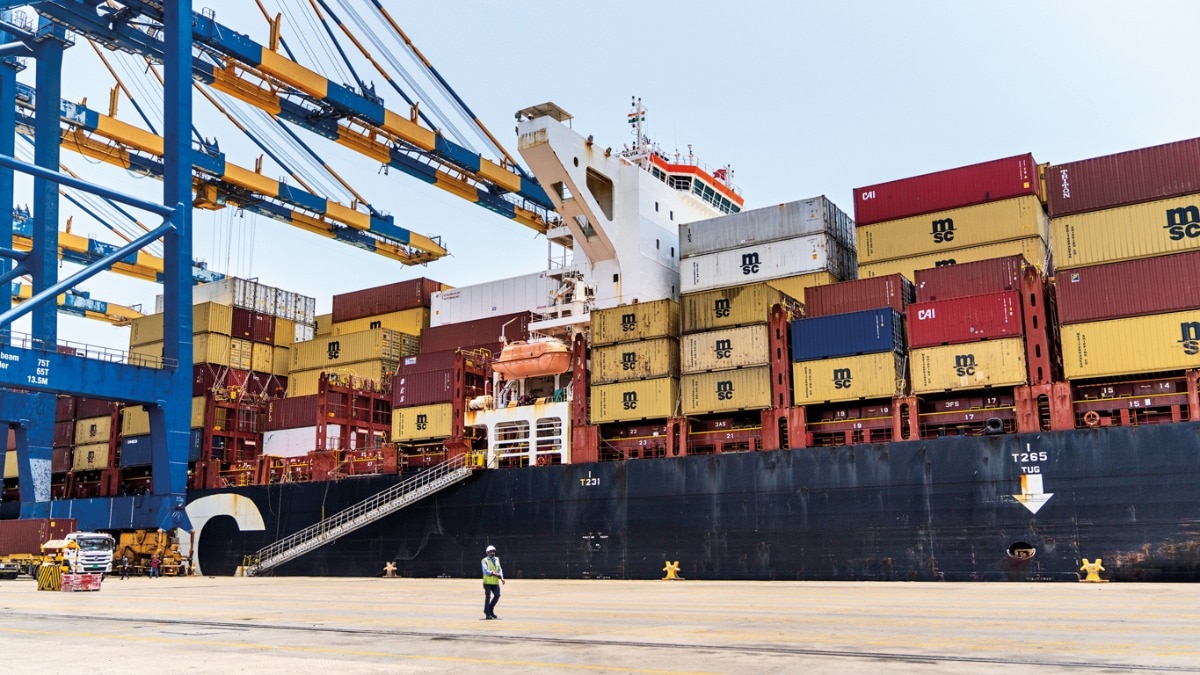

Base metals: Where India’s metal really comes from
The metallic backbone of all manufacturing activities is increasingly arriving by ship rather than from an Indian mine or smelter.What can India do to reduce dependence in the defence sector?
India continues to remain the world's second-largest defence importer. The dependence is worryingly high for some critical equipment.Can India develop a self-sustainable AI ecosystem?
India's overdependence on foreign artificial intelligence models risks a large forex outflow, especially as many of them are currently free for end users. Can local alternatives catch up to arrest dollar flight in this foundational tech?Pharma: Can India take advantage of a China+1 opportunity
India exports pharmaceuticals worth $30.5 billion annually but remains heavily dependent on China for raw materials. This is emerging as one of the biggest challenges facing the country's healthcare and manufacturing ambitions.Behind India's import dependence is solar installations
India's solar installations have multiplied tenfold in the past decade but it's heavily dependent on imports, with 98% of wafers and 100% of polysilicon sourced from China.Much of India’s technology stack is built on technologies developed elsewhere
Beneath India's technology success story lies an uncomfortable reality. The country still runs much of its digital future on a borrowed stack. Can it control technologies that underpin the digital economy?Semiconductors: Can India have its own Silicon Valley?
India's semiconductor ambitions are taking shape but equipment, materials and technologies powering them still come largely from abroad. Can India truly be self-sufficient?China Inside: How India can break China’s hegemonic hold on critical minerals
India's dependence on China for critical minerals is growing at a rapid pace as electric vehicles and battery energy storage systems become mainstream. Can it remove the chokehold?How India can cast off food security’s foreign crutch
With appropriate policy responses, import dependence in edible oils, pulses and fertilisers can be reversed.
India Should Resist Import Substitution: Sajjid Z. Chinoy, Head of Asia Economics, J.P. Morgan
To protect against import concentration from any one country, diversifying imports across multiple economies is crucial.Why Ecosystems are Key to Manufacturing Competitiveness: GTRI Founder Ajay Srivastava
India opened its economy but failed to build industrial depth.
Macro fundamentals remain strong amidst global uncertainty: EAC-PM Chairman S. Mahendra Dev
S. Mahendra Dev, Chairman, EAC-PM, on economic challenges arising from the West Asia war, the need for improvements in manufacturing, and cutting import dependence.
 2026-09-27
 2026-09-13
 2026-08-30
 2026-08-16
 2026-08-02
 2026-07-19
 2026-07-05
 2026-06-21
 2026-06-07
 2026-05-24
 2026-05-10
 2026-04-26
 2026-04-12
 2026-03-29
 2026-03-15
 2026-03-01
 2026-02-15
 2026-02-01
 2026-01-18
 2026-01-04