









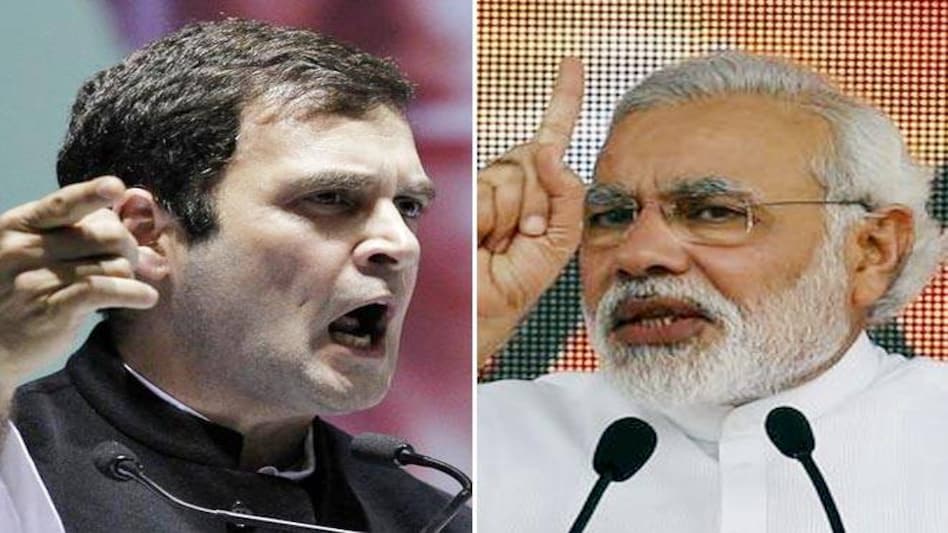
According to the reports, having successfully achieved their primary task of making sure that the BJP did not form a government in Karnataka, the JDS and the Congress are now facing a bit of a dilemma: How to divide the spoils of the war between the MLAs of each side? The two parties have so far only agreed on two things - that HD Kumaraswamy will be the chief minister, and that the BJP should be kept out of power at all costs.
While a number of commentators have been happily proclaiming that Karnataka proves that the opposition can come together to stop the BJP juggernaut, and that it provides a template for the 2019 general elections for all "secular" parties to unite and fight the elections as an alliance, they are ignoring one major problem. The different opposition parties have little in common except for a shared dislike for the BJP and its dizzying rise in the last four years.
The Narendra Modi-Amit Shah combine has been decimating opposition parties in state after state. In the few cases where they have lost - Bihar, Goa to name just two examples - they have still managed to form the government by splitting opposition ranks. Karnataka is a rare defeat, though it remains to be seen how long the Congress-JDS combine will manage to pull along.
While there is little doubt now that if the opposition decides to band together and fight unitedly, it can defeat the BJP - it happened when the RJD and the JDU came together in Bihar, and again when BSP and SP came to an understanding in the UP bypolls - the real question is what happens once the BJP has been defeated. So far, the different opposition parties have not managed to work out a common agenda on how to govern if they were to win a larger number of seats than the BJP in the 2019 election. And that is the biggest problem.
In the past, such coalition governments have taken charge at the centre. A rag tag coalition defeated Indira Gandhi in 1977 under the name of Janata Party, but that government did not last too long. Similarly, another coalition defeated the Rajiv Gandhi government in 1989, but again it did not last too long either.
In the past, the coalitions which have lasted and provided stable governments are those which had one dominant partner - either the Congress or the BJP (under Atal Bihari Vajpayee). These governments have had problems, but not as many as a coalition with no clear leader.
Leading up to the 2019 election, the Congress does not enjoy the kind of clout that it did earlier when it was capable of winning elections in many states in the country. Its influence has diminished and strong regional parties see no reason to confer it with a big brother status. Which is why a united opposition against the BJP formed by the different parties might well have a good shot of winning elections - but would probably not be able to govern once it has achieved its goals.
If the opposition seriously wants to defeat the BJP in 2019, it should sit together and decide on the agenda to be followed once they form a government - and check if individual ambitions will come in the way of forming a stable government. Otherwise, it makes no sense.
 'Confusion and communication gap': Rajesh Exports shares in focus after NSE, BSE clarification on SEBI order
 'We are making a lot of money with India': Trump praises PM Modi, backs US-India trade agreement
 ‘US trying to put pressure…’: Vladimir Putin says India-Russia relations not impacted by these demands
 Looking beyond bank FDs? Company FDs offer up to 9.1% interest; Here's what investors should know
 Repo rate, inflation, GDP forecasts — What to expect from RBI MPC today
 Citi Sees Massive Upside In Power Stocks! ₹9.7 Lakh Crore Opportunity Ahead
 Midcap Winners Ahead? Siddhartha Khemka Reveals Top Themes For FY27
 Govt's Big Move To Save The Rupee! Will Foreign Money Return To India?
 Q4 Earnings Surprise! BFSI, Metals Shine As FY28 Recovery Takes Shape | Siddhartha Khemka
 Reliance Down 17%: Is This the Best Time to Buy Before Jio Listing?
 Nifty, Sensex, Nifty Bank outlook for today: GIFT Nifty up 50 points; key levels to watch
 Acme Solar share: Rs 2,800 cr raised via QIP; Nippon, SBI, Kotak, HDFC MF among allottees'Confusion and communication gap': Rajesh Exports shares in focus after NSE, BSE clarification on SEBI order
 Top stocks in news: Rajesh Exports, RIL, Hindalco, Auro Pharma, IndiGo, HDFC AMC, Ola, Lupin
 'Is this the biggest stock market scam ever? Move over, Harshad Mehta ...' — asks Sanjay Jha