


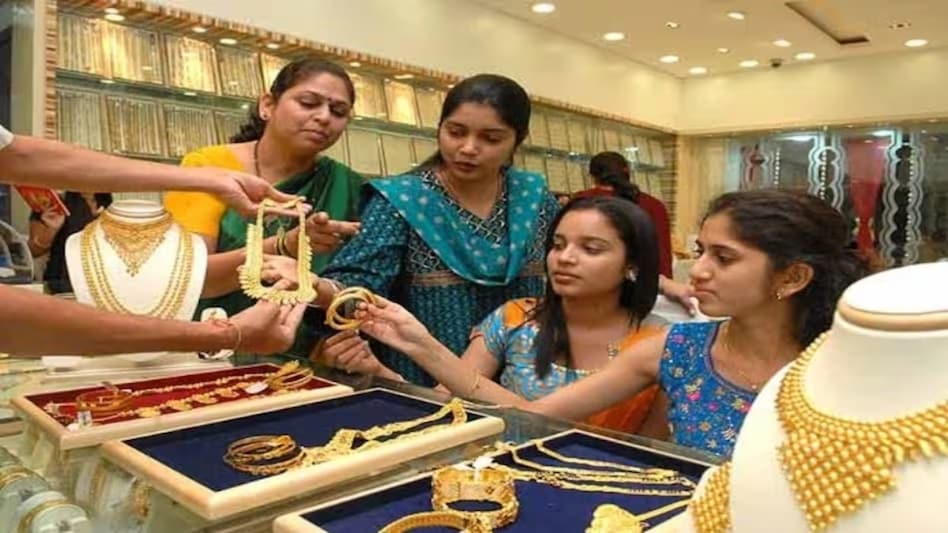
 The World Gold Council report noted households increasingly opted for lighter jewellery, lower-carat products and investment-grade gold while continuing to view the yellow metal as a preferred store of value.
Indians spent nearly Rs 65,000 crore more on gold in the April-June quarter despite buying less of the precious metal, as soaring prices pushed consumers to rethink their purchases. According to the World Gold Council's Gold Demand Trends Q2 2026 report, total gold demand in India declined nearly 6% year-on-year to 131.4 tonnes during the quarter. Yet, the value of those purchases surged 50% to a record Rs 1.98 lakh crore, up from Rs 1.33 lakh crore a year earlier. In other words, Indian consumers spent nearly Rs 65,000 crore more on gold despite buying around 8.3 tonnes less than in the same period last year.
The figures highlight a striking paradox: soaring gold prices have not diminished Indians' appetite for the precious metal, but they have fundamentally changed how consumers buy it.

 90% EVs exported out of India are from Maruti Suzuki: MD & CEO Hisashi Takeuchi
 India's $30 trillion goal needs 8-10% growth, $400 billion more annual investment: Jayant Sinha
 1.1 billion barrels gone: IMF warns that global oil market is running out of safety cushions
 From Devbhoomi to industrial destination: Uttarakhand’s manufacturing moment
 India’s deep-tech startups face a new test: Crossing the valley of death
 #IndiaAt100 : Manufacturing For Viksit Bharat | Can Industry Power India’s $30-Trillion Dream?
 #IndiaAt100 : Tarun Garg On Hyundai & India’s Manufacturing Powerhouse Ambition
 #IndiaAt100 : CM Pushkar Singh Dhami On Uttarakhand’s Industrial Growth & India’s Next Leap
 #IndiaAt100 : Dr. Pawan Goenka On India’s SpaceTech Lift-Off And The Race To 2047
 #IndiaAt100 : P Chidambaram On India’s Growth Dilemma | What Could Hold Back $30 Trillion Dream?
 Cupid, NTPC Green, NTPC, Raymond Realty, HAL shares: Key technical levels to watch
 Defence stock with Rs 2,654-crore order book hits record high; here's why
  GACM Technologies: FII holding jumps to 29%; penny stock in focus
 Puravankara shares rise 5% on fresh order win
  20 high-conviction ideas for up to 95% upside | stocks to buy #IndiaAt100 : Manufacturing For Viksit Bharat | Can Industry Power India’s $30-Trillion Dream?#IndiaAt100 : Tarun Garg On Hyundai & India’s Manufacturing Powerhouse Ambition
 Rising demand, Make in India focus driving manufacturing growth in India, but speed bumps need to be addressed, say expertsFrom Devbhoomi to industrial destination: Uttarakhand’s manufacturing moment90% EVs exported out of India are from Maruti Suzuki: MD & CEO Hisashi Takeuchi












