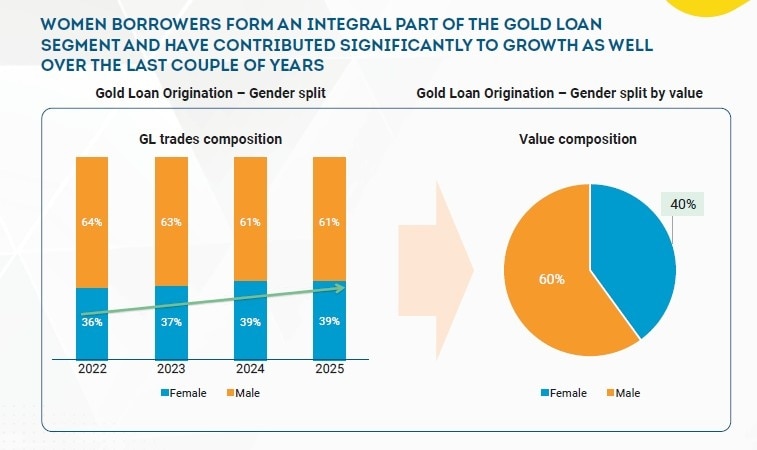



 In 2025, nearly 74% of gold loan borrowers had over ₹1 lakh in outstanding debt at the time of taking a new loan, up significantly from 2022.
Gold loan trends: India’s gold loan market is witnessing a structural shift, transforming from a small-ticket emergency product into a mainstream credit category, with sharp growth and rising borrower exposure raising both opportunities and risks.
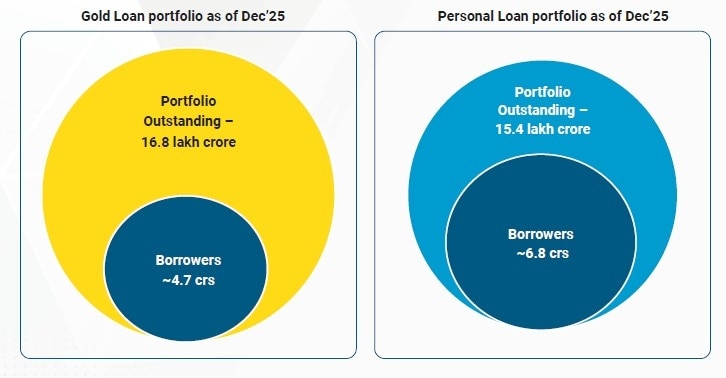
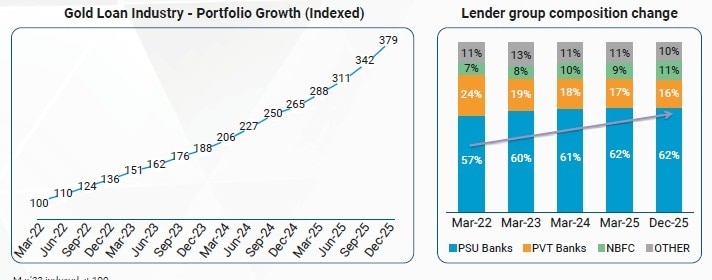
According to TransUnion CIBIL’s Gold Loan Landscape Report (April 2026), the gold loan portfolio has expanded 3.8 times since March 2022, making it one of the fastest-growing segments in retail lending. The surge has pushed gold loans to become the second-largest component of India’s retail credit portfolio after housing loans, underscoring their growing relevance in the financial system.
 BT BIG STORY: Why crypto is still thriving among Indian investors
 Tata Sons reorganisation is a fresh twist in a long tale
 Big relief for Indian pharma: US puts India among 20 countries getting 0% tariff on select speciality drugs
 Tata Trusts propose merger of two Tata units with Tata Sons to avoid listing
 Essar Group's Mesabi Metallics plans $15 billion US steel mill, Trump to unveil the project
 Silver Prices Are Down 13% This Year: Is The Crash Over Or Just Beginning? Expert Anuj Gupta
 Multi-Cap Vs Flexi-Cap: Which Fund Fits Your Portfolio & Risk Appetite?
 Crude Oil Next Big Commodity Bet? | Strait Of Hormuz Crisis | Commodity Outlook
 Nifty Falls: 22,500-22,300 Next? Expert Warns Against Bottom Fishing Amid Sharp Sell-Off
 Meta Muse AI & Smart Glasses, iPhone 18 Pro Max In-Depth Review & Easy iOS Data Transfer | Tech Today
 GIFT Nifty down 81 points; Honasa, Varmora, ITC, HCL Tech, IRFC, Tatas among top stocks in focus
 Adani Power, AEL, Adani Ports, Adani Energy: Adani stocks in focus after SEBI MPS case settlement
 FIIs pulled out $40 billion from India in 2 years: Why foreign investors are staying away
 India stocks look expensive versus Asia as earnings growth lags: DBS
 India’s mid- and small-cap stocks among world’s most expensive, says Ruchir SharmaGIFT Nifty down 81 points; Honasa, Varmora, ITC, HCL Tech, IRFC, Tatas among top stocks in focus
 Indians raise retirement corpus target to ₹1.5 crore, but still underestimate their needsAdani Power, AEL, Adani Ports, Adani Energy: Adani stocks in focus after SEBI MPS case settlement
 This man created an edtech giant bootstrapped from Day 1Tata Sons reorganisation is a fresh twist in a long tale