












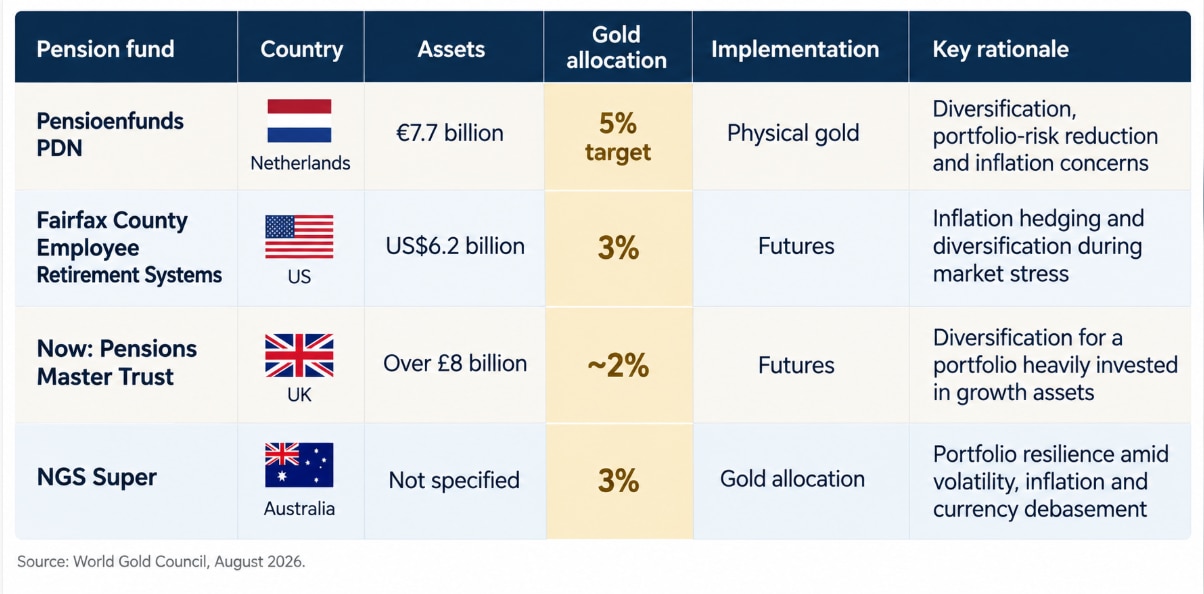



 Gold is being considered for portfolio diversification, inflation-risk management, liquidity and improving risk-adjusted returns at the portfolio level.
Gold is gaining a larger role in the portfolios of some pension funds as investors reassess traditional diversification strategies amid geopolitical tensions, inflation shocks and changing relationships between equities and bonds.
A World Gold Council report examining pension-fund case studies shows that institutional investors are using gold for reasons that go beyond expectations of rising prices. The asset is being considered for portfolio diversification, inflation-risk management, liquidity and improving risk-adjusted returns at the portfolio level.

 Sharp rise in global bond yields poses huge challenge for emerging markets, says DEA secretary
 'Russia stood by us when...': EAM Jaishankar explains why India's ties with Moscow endure
 Trump creates 'Super Intelligence Force' to lead US AI push: What it will do
 'US has deliberately become a lonelier power': EAM Jaishankar on shifting global order
 'Kerala has a serious debt problem': Former Cabinet Secretary on state's finances
 Gold Vs Silver: Which Should Investors Buy? Ajay Kedia Shares His 70:30 split Strategy
 Can You Sell Bonds Before Maturity? Liquidity, Exit & Penalties Explained
 Bonds Vs FDs: Are Bonds A Better Alternative For Higher Returns? Risks Explained
 Should You Buy Gold Now? Festive and Wedding Season Strategy Explained
 Direct Vs Regular Mutual Funds: Why the Right Advisor May Matter More Than 1% Cost
 Nvidia shares approach record high as AI optimism revives investor demand
 Sebi receives 20,000 comments on proposed CAS changes; framework to follow soon
 Stock market sell-off: Nifty, Sensex log 8th straight weekly loss; key levels & top triggers now
 IPO boom: 69 Indian companies raise Rs 90,500 crore in Q3 despite stock market sell-off; what's next
 TCS, Infosys, HCL Tech, TechM, Wipro, LTM, Coforge, HEXT: Fresh target, Q2 previews for IT stocks
 ₹22,000-₹24,000 rent, ₹1.5 lakh deposit for old 1BHK, Bengaluru resident calls out rising housing costs
 REIT payouts double to ₹3,136 crore: Is Indian commercial real estate becoming an income play?
 Travelling alone in Delhi after dark? This AI-powered map shows areas where women may need extra caution
 ISB's Madan Pillutla on why business schools in future have to offer what is relevant
 ‘Sometimes the best decision...’: French man moves to Mumbai for work, says these 3 things took him by surprise


