


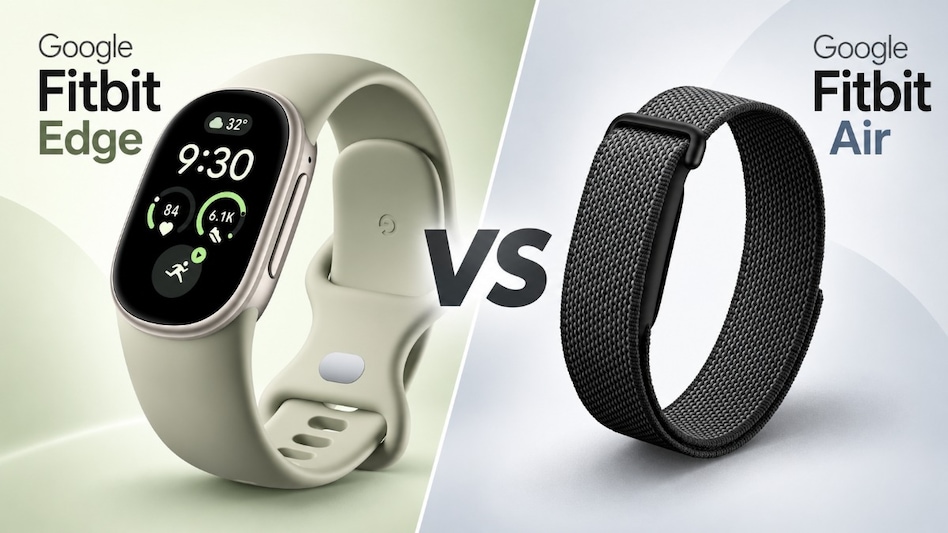
 How the two trackers differ in design, features and price. (Photo: Google)
Choosing between Google’s Fitbit Air and Fitbit Edge depends on how you want to track your health and workouts. The Air is designed for people who prefer a lightweight fitness band without a screen, while the Edge offers a display, built-in GPS and additional health-monitoring features. Both track heart rate, blood oxygen levels and skin-temperature variations, and promise up to seven days of battery life. However, the Edge costs more and lets you view workout information directly on your wrist.
MUST READ | Google’s new Fitbit Edge signals a shift towards AI health coaching and longer-lasting wearables

 BT BIG STORY: Your next colleague could be an AI agent. What does that mean for Indian IT, and for your job?
 Marco Rubio's India visit: Energy cooperation, Jamnagar refinery visit on cards during 5-day trip
 BT Explainer: Strong GDP, weak rupee: Why India cannot stop its currency from falling
 'Had a warm, productive conversation': PM Modi after phone call with Canadian PM Mark Carney
 Tata dispute has created anxiety in family businesses, firms reviewing independent directors: Harsh Goenka
 TCS, HCLTech Rally Amid Global AI Jitters: What's The Next Market Move?
 How Aditya Birla Group Navigates Tariff Uncertainty & Builds Global Competitiveness
 Kumar Mangalam Birla on Why Businesses Must Think Twice Before Rushing Into AI
 Delhi’s Jantar Mantar No Longer A Protest Hub: 3 New Sites, Costs And Rules Explained
 Exclusive: Shashi Tharoor On SIR, Voter Deletions And BJP’s Charge Against Opposition
 Persistent, Coforge, Mphasis: Analyst shares midcap picks amid IT rally
  Tata Steel, Vedanta or Lloyds Metals? Analyst shares top stock pick
  BEL discloses additional orders worth Rs 533 crore, check details
  Investors gain Rs 5 lakh crore as Sensex, Nifty gain over 1% each; key factors behind the rally
  Tonbo Imaging IPO: Akash Bhansali, SBI Funds among investors buying shares worth Rs 413 crore'Had a warm, productive conversation': PM Modi after phone call with Canadian PM Mark Carney
 Taking a power bank on your next IndiGo flight? Seven packing and charging checks after the Delhi–Chennai incident
 Cleared SSC GD’s written stage? Understand the running test, physical standards and documentsMarco Rubio's India visit: Energy cooperation, Jamnagar refinery visit on cards during 5-day trip
 Festive season bonanza: Big discounts on Renault Duster, Hyundai Creta












