















 According to Techarc's research, brands that primarily trade finished products tend to reach a revenue ceiling of around ₹500 crore.
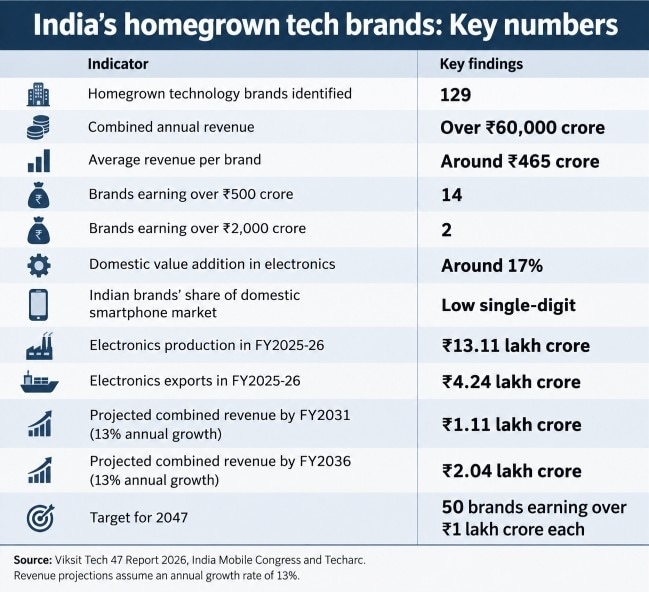
India has 129 homegrown brands across gadgets, devices, appliances and connected cars, generating more than ₹60,000 crore in annual revenue. Yet, only 14 of these brands earn more than ₹500 crore, while just two clearly cross ₹2,000 crore, highlighting the challenge Indian companies face in building technology businesses at scale, according to the Viksit Tech 47 Report 2026 by India Mobile Congress and Techarc.
The report estimates average annual revenue at around ₹465 crore per brand, suggesting that much of India's homegrown consumer technology industry remains concentrated in relatively small businesses, despite the country's expanding electronics manufacturing ecosystem.

 'Shame on you Modi, Shah': CJP as Abhijeet Dipke, Ashutosh Ranka, Saurav Das detained from plane
 RBI's rupee defence: Special dollar window for oil firms, tighter forex derivative rules
 US midterms 2026: Why a Democratic House may not ease Trump's tariff pressure on India
 Jantar Mantar protest: YouTuber Dhruv Rathee detained from his Gurugram residence, claims CJP
 Jantar Mantar protest today: CJP demands Dhruv Rathee's immediate release, issues 12-point briefing to protestors
 5 Reason Why Cheap Premium Insurance May Not Be The Best Choice
 Health & Life Insurance: How Much Cover Do You Really Need? Expert Explains
 Silver Investment Outlook: Why Gen Z Should Watch This Metal's Long-Term Growth Potential
 Gold Price Outlook: Is This the Right Time to Invest? Expert Sees Potential for New Highs
 India Slams US PERM Suspension, Says JD Vance’s ‘Indentured Servants’ Remark Is Offensive
 Market on the back foot, opportunities ahead: where should investors put their money?
 Poonawalla Fincorp Q2 earnings: Net profit zooms 405%, NII at Rs 1,589 crore
  Vedanta, TCS shares to turn ex-dividend; Ola rights issue; 2 stock splits next week
 IPO rush: Rs 50,000 crore worth IPOs to hit Street by Diwali; Jio, Avada to lead fundraise
 Adani Ports, GMR Airports rise up to 5% amid block deal reports; check details 'Shame on you Modi, Shah': CJP as Abhijeet Dipke, Ashutosh Ranka, Saurav Das detained from plane5 Reason Why Cheap Premium Insurance May Not Be The Best ChoiceRBI's rupee defence: Special dollar window for oil firms, tighter forex derivative rulesJantar Mantar protest today: CJP demands Dhruv Rathee's immediate release, issues 12-point briefing to protestors
 China buys 23 tonnes of gold in September, highest monthly purchase since 2023


