












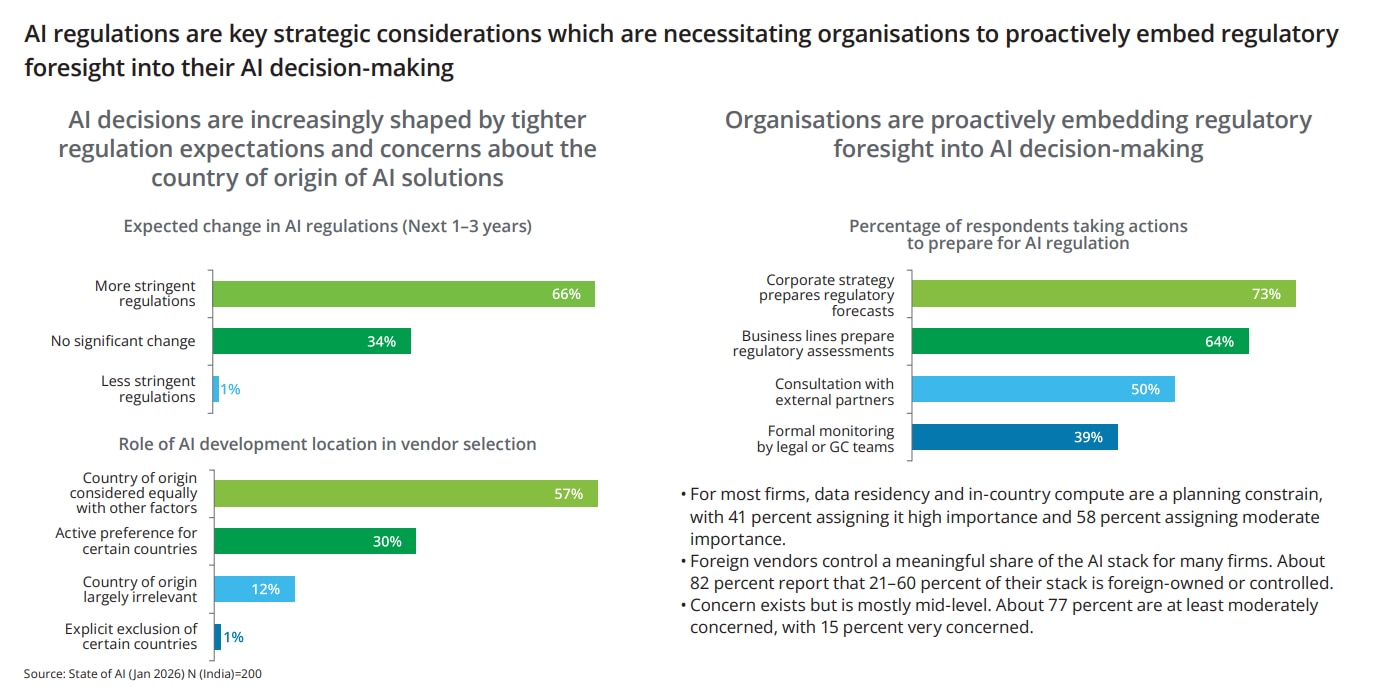



 The report notes that regulation is now influencing not just compliance functions, but also core business decisions, including vendor selection and infrastructure planning.
As Indian enterprises scale AI adoption at a fast pace, regulation is no longer a compliance afterthought, it is becoming central to strategic decision-making.
According to Deloitte’s State of AI in the Enterprise: India Insights report, “AI regulations are key strategic considerations which are necessitating organisations to proactively embed regulatory foresight into their AI decision-making.”

 NSE IPO: Exchange raises Rs 6,746 crore from 189 anchor investors; LIC, GIC, Fidelity among buyers
 India’s chip push goes global: Semiconductor heavyweights deepen footprint ahead of SEMICON 2026
 NSE IPO opens tomorrow: Brokerage weighs growth prospects, valuation; what GMP indicates
 UPI MDR: No rollback of 0.4% fee above Rs 2,000; govt says move will make UPI self-sustainable
 From Rs 300 to Rs 25,000: How the wage ceiling under EPFO has increased over the years
 “Onion Prices Down 9% In 9 Days”: Nidhi Khare On Availability And ₹35/Kg Retail Sales
 Indian Markets At A Crucial Juncture: Nifty, Crude, Fed & Smallcaps | Jaipuria
 Nifty At 23,200: Crude Oil, U.S. Fed Rate Hike Fears & Market Outlook Explained
 “7.8% Growth Is Not Random”: FM Sitharaman Credits India’s People, Industry And MSMEs
 Indian I.T. Stocks: Why AI Disruption & Weak Growth Are Making Investors Rethink Their Bets
 NSE IPO: 26 crore investor accounts and 3,000+ listed companies — 10 numbers to know
 US Fed rate hike: Why India could face pressure from higher US yields and a stronger dollarNSE IPO: Exchange raises Rs 6,746 crore from 189 anchor investors; LIC, GIC, Fidelity among buyersNSE IPO opens tomorrow: Brokerage weighs growth prospects, valuation; what GMP indicates
 Paytm, KRN Heat Exchanger, Ather Energy, Vishal Mega Mart: Expert shares key entry levels, targets
 UPI MDR: Surjewala says govt should have charged foreign players $50-100 million annual fee
 Widowhood risk in retirement: Why a well-planned financial future may still fall short
 'I am not complicit': Ed Sheeran responds to Macklemore’s removal from US tour
 Planning Uzbekistan trip? Indians with US, UK, Schengen visas can enter without Uzbekistan visa
 Dadasaheb Phalke Award 2024 goes to Anant Nag: What comes with the prestigious honour?


