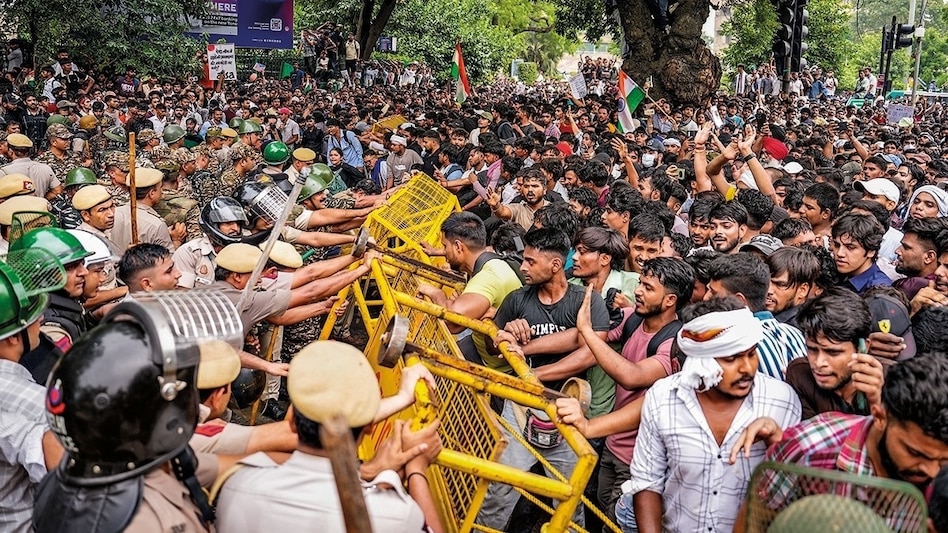
So, it was striking to find the song resurfacing across Instagram over the past few weeks. As one of the largest student movements of the past decade unfolded—led by the meme page Cockroach Janata Party and organised by students' unions across India—the soundtrack of the protests reached back several generations. Even though the movement played out as much on Instagram as it did on the streets, many of the songs that came to define its emotions—anger, hope, grief and solidarity—were older than most of the students singing them.
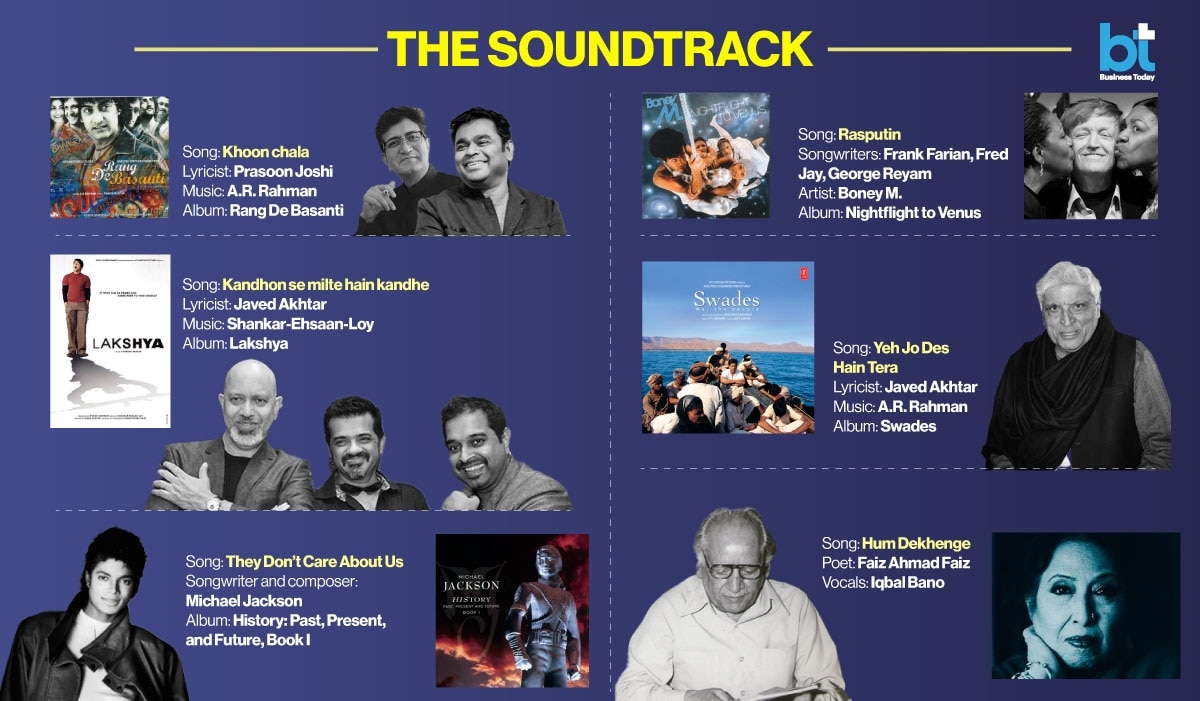
Tu Zinda Hai wasn’t the only song. Songs from Rang De Basanti, Yuva, Swades, Lakshya, Faiz Ahmed Faiz’s poems, and several old regional songs became the soundscape of the protests. The videos looked different depending on where they came from. Some were shot professionally; others were shaky phone recordings. There were speeches, slogans, dance performances, late-night marches, and the inevitable memes that accompany every movement today.
But everyone was using the same audio. Faiz Ahmed Faiz would appear in one video before giving way to a Bengali protest song in the next. An independent release would follow an old Hindi film song. Now and then a newer track would slip into the mix, but the songs people seemed to return to had been around for years.
MUST READ: 'Spider-Man: Brand New Day' box office collection day 2: Tom Holland-Zendaya film crosses ₹100 crore in India, ₹200 crore next?
New times, old method
Protest movements have long borrowed their music. The freedom movement drew on patriotic songs. Trade unions had the IPTA. The anti-Emergency years had their own repertoire. Every generation inherits a soundtrack before it writes one of its own.
The way those soundtracks are created and consumed, however, has changed dramatically over the past two decades. According to the International Federation of the Phonographic Industry (IFPI) Global Music Report 2026, global recorded music revenues touched $31.7 billion last year, extending an eleven-year streak of growth. Streaming subscriptions now account for more than half the industry's revenues, and nearly 837 million people around the world pay for music every month. Piracy, once seen as an existential threat, has given way to an era in which almost every song ever recorded is available in a few taps.
Because streaming pays per play rather than per album sold, labels benefit from keeping listeners returning repeatedly rather than persuading them to buy one large release.
Never has so much music been available so cheaply. For Rs119 a month, a listener can move from M.S. Subbulakshmi to AP Dhillon to Kendrick Lamar without leaving the same app. Streaming data now helps artists to know which city listens to them most, where people stop listening and which 20-second clip has taken off on Instagram. Songs don't have to wait for radio stations or music television anymore. A reel does the job within hours.
In many ways, streaming has democratised music. Regional music has travelled farther than it ever could through the old gatekeepers. The barriers to entry have fallen.
But the way people listen to music inevitably shapes the way music gets made and sold. There was a time when the Indian music industry thought in albums.
MUST READ | 'Spider-Man: Brand New Day' movie Twitter review: 'Best-looking Spider-Man movie ever,' say fans on Tom Holland-Zendaya film
Before Spotify playlists and Instagram reels, there were cassette racks at neighbourhood music shops, new releases stacked at Planet M and Music World, countdown shows on Channel V and MTV, and Sunday mornings spent waiting for your favourite song to appear on television. A film soundtrack was often the first thing audiences encountered.
Music labels released albums weeks before the film because the songs were expected to create anticipation, and sometimes they ended up becoming bigger than the film itself. By the time Dil Se released, audiences already knew Chhaiya Chhaiya. Roja, Bombay, Dil Se, Lagaan, Saathiya, Swades and Rockstar are remembered as complete listening experiences. People bought or borrowed the soundtrack because they wanted to hear the whole album, not just one song. Besides promoting the film, the music was creating anticipation for it.
Success looked different then. Music labels cared about how many cassettes and CDs a soundtrack sold. Radio stations measured what listeners kept requesting. Channel V and MTV countdowns became a barometer of popularity. And because people returned to the album rather than a single song, a good soundtrack could remain part of the conversation long after the film had left theatres.
Economics of longevity
Streaming removed the constraints of physical distribution, but it also placed every new release alongside millions of older songs competing for the same listener. The battle shifted from finding shelf space in a music store to finding a place in someone's playlist.
That also changes how songs are written, how films use music and how labels decide where to place their bets.
That may explain why, when thousands of students went looking for songs, they reached for music that gave ideas and emotions room to breathe. These weren't tracks built around a single memorable hook. They unfolded slowly, allowing the lyrics and the composition to carry anger, grief, hope and solidarity in ways that a 20-second refrain rarely can.
The rival for a new song today isn't another soundtrack. Think about how most of us listen to music today. We start a playlist while commuting, interrupt it to answer a call, switch to Instagram, come back for another song, then disappear into YouTube.
And that has changed how labels think about risk. Many now spread their bets across singles, collaborations and independent artists as that mitigates commercial risk more effectively than betting the same budget on one soundtrack.
Composers have adapted too. The long instrumental openings that once gave Hindi film music room to breathe have become rarer. Think of A.R. Rahman's Dil Se Re. Listen to the opening minute of Taal Se Taal Mila. Both take their time before arriving at the first line. Many contemporary pop tracks reveal their catchiest line much earlier. It's less a rule than a reflection of how listening habits have changed.
While much of today's music is created for an age of instant discovery, some of the industry's most valuable assets are songs recorded decades ago. The industry's investment decisions reflect that tension between chasing new listeners and relying on proven songs.
In 2024, Sony Music paid a reported $1.27 billion for Queen's catalogue. Bob Dylan, Bruce Springsteen and Pink Floyd have all been part of the catalogue gold rush in recent years. Investors were buying songs that had already proved they could survive several generations of listeners, instead of the next hit.
Music label Saregama's business itself illustrates the economics of catalogue. Its library of more than 150,000 songs has generated value across every technological shift—from vinyl and cassettes to CDs, caller tunes, streaming and Carvaan. In its annual report, the company argues that the shift towards paid streaming should further improve realisations from its catalogue.
Every time an old song returns—through streaming, reels, films, advertisements or public events—it generates fresh licensing or streaming income without requiring new production costs.
So why isn't everyone trying to make another Queen?
Part of the answer is that nobody knows, at the time of recording, which song will still matter 20 years later. Labels therefore rely more on repeatable strategies such as frequent releases and playlist placement than on trying to predict which song will still matter decades later.
In the era of physical music, labels often placed a few big bets every year. A film soundtrack could have seven or eight songs, recorded over months with live musicians, multiple singers and elaborate orchestration. If the album worked, it generated revenue through cassette and CD sales, radio airplay and television for years.
The IMI-IFPI Digital Music Study found that while 60% of Indian listeners consumed new Bollywood music, 53% also listened to vintage Bollywood songs. Classic Bollywood was almost as likely to be named a favourite genre as new Bollywood, suggesting that India's streaming boom has expanded the audience for older music rather than replaced it.
Mainstream films rarely depend on sprawling eight-song albums anymore. Storytelling has become tighter, background scores have taken on greater importance, and many films are marketed around one or two headline tracks. At the same time, a growing share of popular music is no longer tied to cinema at all. Independent artists can build careers without waiting for a film producer to call.
Yet, the streaming era has also produced an unexpected outcome.
After the Reel Ends
Social media was supposed to accelerate novelty. Instead, it has become one of the biggest engines of rediscovery. Goldman Sachs, in its Music in the Air report, argues that much of the industry's future growth will come not just from adding subscribers but from extracting more value from music intellectual property.
The protest reels carried an unexpected business lesson. At a time when the industry can measure every stream and every skip, the songs that held one of the country's biggest student movements together were, often, decades old.
A song that keeps returning—to films, weddings, sporting victories, protests and now Instagram—can keep earning for generations.
The music business will always chase the next hit. The protests were a reminder that its most valuable songs are often the ones that have already stood the test of time.















 Protest movements have long borrowed their music. The freedom movement drew on patriotic songs. Trade unions had the IPTA. The anti-Emergency years had their own repertoire.
  NSDL, CDSL, BSE shares: Check key technical levels to watch out for
 Bajaj Finance, L&T Finance, PNB Housing, Five-Star Finance: NBFC stocks to buy
 Raksha Bandhan 2026: Will NSE, BSE be closed on August 28? Check stock market holiday
 India, Canada eye Bilateral Investment Treaty to unlock ₹4.65 lakh crore trade by 2030
  Are banks closed on Raksha Bandhan? Check full list of states where physical operations are affected
 IDV Explained: How It Impacts Your Motor Insurance Premium & Claim
 Nepal Flood Crisis: Massive Floods Leave Trail Of Destruction Across Rasuwa, Nuwakot And Chitwan
 Oseltamivir Shortage Explained: Why H1N1 Cases Are Driving Demand & Prices Are Varying Sharply
 Stock Market Outlook: Strong Earnings, Global Risks; What’s Next For Nifty Above 24,000?
 Lupin Stock Outlook: Citi Downgrade Vs Bernstein Buy; Is The Pharma Stock A Buy Now?
 Multibagger listing: Tempsens Instruments shares rally over 111% on debut
 Tejas Networks shares rally 10% on Rs 1,537 crore TCS order win; key details
  SBI Funds share price: Jefferies initiates coverage with Buy, 26% upside target
 Stock market: Rising US bond yields to trigger selloff? What Emkay says
  Beyond factory floors: Piyush Goyal outlines next generation India-Japan economic partnership
 Not US, not Canada: This country is the world's best for women; Here's what makes it No. 1


