


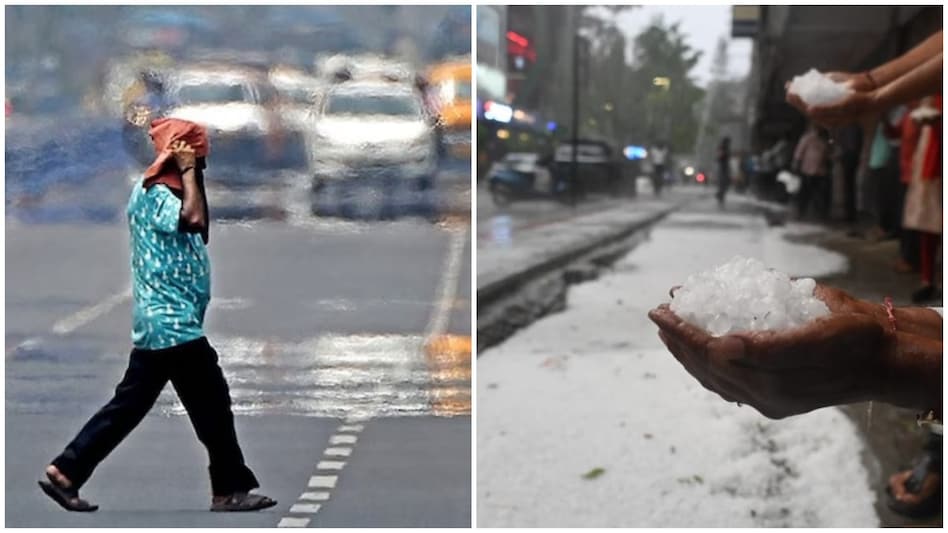
 Climate scientists have repeatedly warned that global warming increases the frequency and intensity of extreme weather events.
 India is likely to witness above-normal heatwave days across several regions in May, with the India Meteorological Department (IMD) warning that parts of east, central and northwest India, along with sections of the southern peninsula, could see prolonged spells of extreme heat.
The warning comes even as several states continue to experience thunderstorms, hailstorms and heavy rain — a seemingly contradictory weather pattern that has left many wondering how heatwaves and hail can occur simultaneously.
FAQs
Which parts of India are likely to face the worst heatwave conditions in May?
The IMD has said above-normal heatwave days are likely in northwest India, including Rajasthan, Delhi, Haryana, Punjab and Uttar Pradesh, as well as central India, parts of eastern India and some areas of the southeast peninsula.
Why are heatwaves and hailstorms happening at the same time in India?
Meteorologists say this can happen because different weather systems are active together. Western disturbances are bringing moisture and instability, while intense surface heating is pushing temperatures very high, leading to thunderstorms and hail in some places and dry heat in others.
What is causing thunderstorms and hail during extreme summer heat?
Very high land temperatures create strong upward movement of hot air. When this heated air mixes with moisture from western disturbances or local weather systems, tall thunderclouds can form quickly and may produce lightning, gusty winds, rain and hail.
Who is most at risk during the current heatwave conditions?
Children, elderly people and outdoor workers are among the most vulnerable. The IMD has also warned that warm nights and hot, humid coastal conditions can increase heat stress and make recovery from daytime heat more difficult.
Is climate change making India’s weather more erratic?
Yes, experts say rising temperatures are making heatwaves longer and more intense. Warmer air can also hold more moisture, which increases the chances of intense short-duration rainfall and thunderstorms, leading to sharp swings between extreme heat and severe storms.

 Hyundai, Kia parent Hyundai Motor Group to invest $15.5 billion in India till 2032
 Tata dispute has created anxiety in family businesses, firms reviewing independent directors: Harsh Goenka
 Apple unveils 'HomeView' Smart Home Hub with a 7-inch display, Siri AI and competitive price: All details
 GST’s next big push: More taxpayers, better compliance and higher revenue
 Sanjeev Sanyal warns: Chasing GDP growth above 7% could push inflation past 6%
 TCS, HCLTech Rally Amid Global AI Jitters: What's The Next Market Move?
 How Aditya Birla Group Navigates Tariff Uncertainty & Builds Global Competitiveness
 Kumar Mangalam Birla on Why Businesses Must Think Twice Before Rushing Into AI
 Delhi’s Jantar Mantar No Longer A Protest Hub: 3 New Sites, Costs And Rules Explained
 Exclusive: Shashi Tharoor On SIR, Voter Deletions And BJP’s Charge Against Opposition
 Persistent, Coforge, Mphasis: Analyst shares midcap picks amid IT rally
  Tata Steel, Vedanta or Lloyds Metals? Analyst shares top stock pick
  BEL discloses additional orders worth Rs 533 crore, check details
  Investors gain Rs 5 lakh crore as Sensex, Nifty gain over 1% each; key factors behind the rally
  Tonbo Imaging IPO: Akash Bhansali, SBI Funds among investors buying shares worth Rs 413 crore
 $500 billion in nature-harming subsidies: Can COP17 get governments to redirect the money?
 Who watches the highway cameras? The privacy and governance questions around AI surveillance
 Vande Bharat sleeper 2AC tour: What makes this overnight train a premium travel upgrade?
  Inflation versus household budgets: Which expenses are rising fastest?
 'I will be there after elections': Trump warns Houthis over strikes on Saudi Arabia












