














 The expansion of GCCs, semiconductor facilities and research operations could generate skilled employment while strengthening India's position in international technology supply chains.
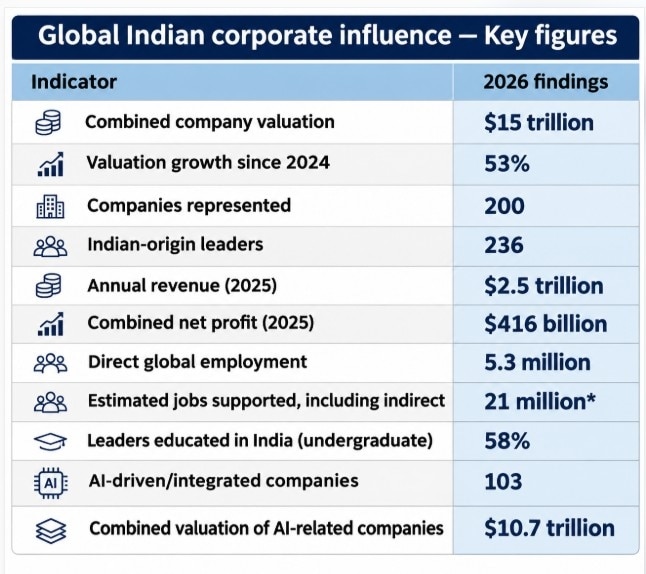
Indian-origin business leaders now head companies with a combined valuation of $15 trillion, reflecting their growing influence across the global economy. However, the bigger question is whether India can translate this corporate leadership into greater domestic investment, technology development and employment opportunities.
According to Hurun India's findings, companies led by Global Indians collectively generate $2.5 trillion in annual revenue and employ approximately 5.3 million people worldwide. Their combined valuation has surged 53% over the past two years, driven partly by the rapid expansion of artificial intelligence and technology businesses.

 'My worry is that listing will change the Tata way': Noel Tata fears profit over philanthropy
 Sheikh Hasina's return now hinges on India as Bangladesh says legal formalities are complete
 What made India’s net power capacity addition fall to its lowest in a year?
 Trump considers delaying fresh Iran strikes as Saudi Arabia, Turkey urge restraint: Report
 Air India flights to US remain on schedule despite nationwide ground stop, says airline
 PM Modi Criticises Past Governments Over Farmers’ Welfare At Agriculture Conclave
 SIP Strategy: Should You Continue, Increase Investments Or Rebalance Your Mutual Fund Portfolio?
 How Should Women Invest In Their 20s, 30s, 40s & 50s To Build Long-Term Wealth?
 Samvat 2083: How Should Investors Rebuild Portfolios After Market Correction? Expert Advice
 PM Modi: Govt Limits Diesel Price Hike To ₹7, Absorbs ₹43 Burden To Protect Farmers

 Markets Next Week: Key triggers that could move Dalal Street — Return of FIIs, Nvidia earnings, inflation and US trade deal
 Anthropic's $1.4 trillion IPO faces a $901 billion question: Can AI revenues justify its compute bill?
 What happens if a trader defaults on Sunday? The hidden risks behind 24/7 stock market trading
 Buying stocks based on tips? 7 financial checks every retail investor should make before investing
 AI trade losing momentum? Jefferies says India could emerge as a big winner of global market rotationMarkets Next Week: Key triggers that could move Dalal Street — Return of FIIs, Nvidia earnings, inflation and US trade deal
 29 kmpl mileage, ₹1.5 lakh savings? Renault Duster's new deal has a catchAnthropic's $1.4 trillion IPO faces a $901 billion question: Can AI revenues justify its compute bill?
 Flexicap funds pull ₹1,886 crore from international equities: Is domestic investing back in favour?
 Financial Horoscope Today, November 15, 2026: Pisces Will See Improvement in Financial Condition, Know the Status of Other Signs


