In a post on X, she said the discussion surrounding the clarification had generated "more heat than light".
While citizenship and passports are governed by different laws, the former foreign secretary stressed that a passport remains the strongest evidence of Indian nationality for most citizens in everyday life.
Don't Miss: Passport fees hiked from July 1: Fresh passport to cost Rs 2,500, Tatkal fee...
According to Rao, the MEA's position is rooted in law. A passport is issued under the Passports Act, while citizenship is governed by the Citizenship Act, 1955. "One law regulates the document; the other regulates the legal status," she wrote, adding that legal definitions and public understanding are not always the same.
Why the clarification raised questions
For most Indians, a passport is the most authoritative document issued by the Republic, Rao noted. It carries the holder's identity, bears the name of the Republic of India and is accepted globally because foreign governments trust that India has verified the bearer's nationality before issuing it.
Given that reality, the former foreign secretary said it was understandable that many people were asking: "if a passport is not proof of citizenship, then what is?"
Citizenship and passports serve different legal purposes
Explaining the distinction, Rao wrote that a passport does not create citizenship and is not the final legal instrument for determining citizenship if the matter is challenged before a court.
The former diplomat pointed out that, like many democracies, India separates citizenship law from passport law. In rare cases involving fraud, disputed parentage or illegal acquisition, citizenship may need to be established through the provisions of the Citizenship Act and supporting evidence.
For that reason, she explained, a passport is not regarded in law as conclusive proof of citizenship in every possible circumstance.
Passport remains powerful evidence of nationality
At the same time, Rao stressed that the legal distinction should not be confused with the practical significance of a passport.
The former foreign secretary noted that a passport is issued only after the government has satisfied itself that an applicant is entitled to one and remains the strongest evidence of Indian nationality that most citizens will ever possess in everyday life and international travel.
She also dismissed concerns that the clarification would affect the credibility of Indian passports abroad, saying no immigration officer would suddenly view an Indian passport with suspicion because of a legal clarification made in New Delhi.
Lessons from documentation challenges
The issue also highlights broader challenges in India's civil registration and record-keeping systems, according to Rao.
She noted that India's systems developed unevenly over decades and that millions of older Indians were born at a time when birth registration was incomplete. Differences in names across school certificates, land records and electoral rolls have also created documentation challenges.
Referring to the experience of the National Register of Citizens in Assam, the former foreign secretary said documentary inconsistencies can create profound hardship when citizenship becomes the subject of legal scrutiny.
Need for stronger records
The lesson, Rao argued, is not that passports have lost their value. Instead, India needs stronger and more comprehensive civil registration, universal birth registration and reliable archival records so that citizenship never becomes hostage to missing or inconsistent paperwork.
The former diplomat also observed that legally precise statements can sometimes create unnecessary public anxiety if they are not accompanied by adequate explanation.
A clearer way to communicate the message
Rao suggested that the government's position could have been framed more clearly. In her view, a better explanation would be that a passport is issued only after the government has verified that the applicant is an Indian citizen and that, while citizenship itself is governed by the Citizenship Act, the passport remains the Republic's most trusted document for international travel and the clearest evidence of Indian nationality in ordinary life.
Such a formulation would be both legally accurate and reassuring, she argued. "The law need not be diluted, but neither should public confidence in one of the Republic's most important documents."
Summing up her position, the former foreign secretary said a passport is issued because the government has satisfied itself that the holder is an Indian citizen. It is therefore powerful evidence of citizenship in ordinary life and international travel.
However, in a legal dispute over citizenship, the governing law remains the Citizenship Act, and a passport is not conclusive proof that overrides all other evidence, she added.



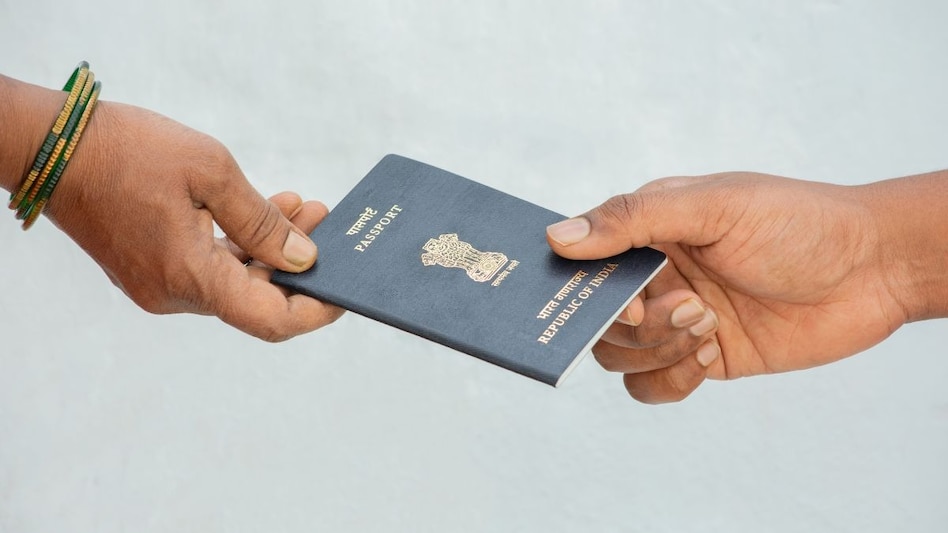 For most Indians, a passport is the most authoritative document issued by the Republic, Rao noted.
 GLP-1 drugs are under fresh scrutiny over rare condition; here's what's happening
 IRDAI’s insurance distribution reforms: What changes for insurers, brokers, customers
 SBI announces ATM charge waiver during bank strike; UPI, NEFT, RTGS services to continue
 This is not a tax, cess, surcharge...: FM Sitharaman explains what the new UPI MDR really means
 BT Big Story: The price tag of UPI: Will small shops go back to cash?
 How Is Alexa+ Different? Will It have Ads Even If You Pay? Exclusive Chat
 Demand Robust Across Segments | Production To Ramp Up, Exports To Expand: Vivek Srivatsa
 GST Council To Meet On October 7: Invoice Matching, ITC & UPI MDR Tax In Focus
 Tata Chip Plans Stay On Track Despite Boardroom Rift; Dholera Fab Investment Unaffected
 GLP-1 Drugs Face Eye Safety Concerns: Will Fresh Scrutiny Impact India's Growing Market?
 IPO rush: Four IPOs conclude today; check subscription status, other details of issues still open
 Meesho shares slip 7% as Nomura assigns 'reduce' call; here's what the brokerage says
  Sensex, Nifty extend losing streak to seventh week, longest since 2020: What's next?
 Suzlon in bear grip: Oversold signals emerge near 52-week low for the stock
  EIL shares jump 7% to hit record high; stock up nearly 62% in six months: What's driving the rise?
 Financial Horoscope Today, September 26, 2026: Aries Should Follow a Budget, Know the Status of All Signs
 RBI’s FCNR window: Why banks need seamless digital onboarding to win NRI customers
 BlackRock sees AI agents creating a new economy for stablecoins, blockchain and compute
 Who is Mandeep K Bhandari? Meet the new CBSE chairman with 25 years of administrative experience












