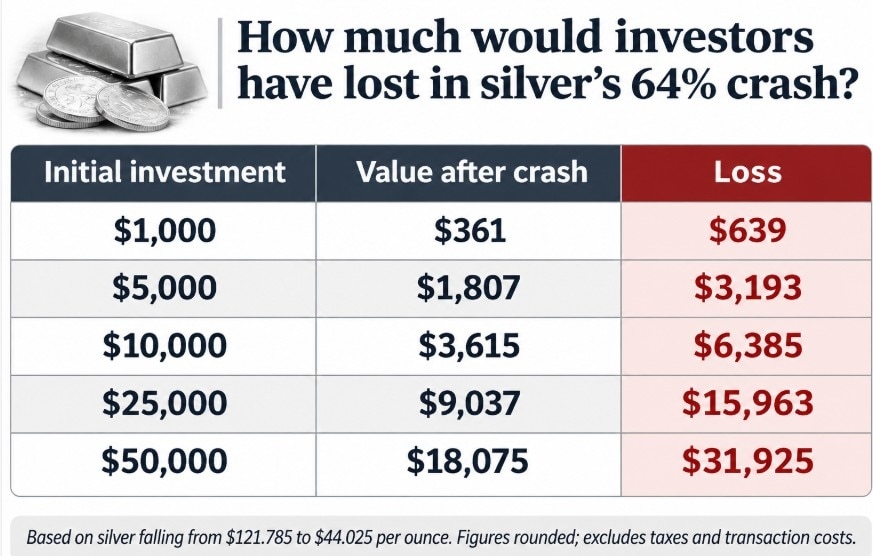



 Silver has plunged 64.2% from its January peak, compared with gold’s 31.5% decline, eroding investor wealth and sharply reducing ETF values.
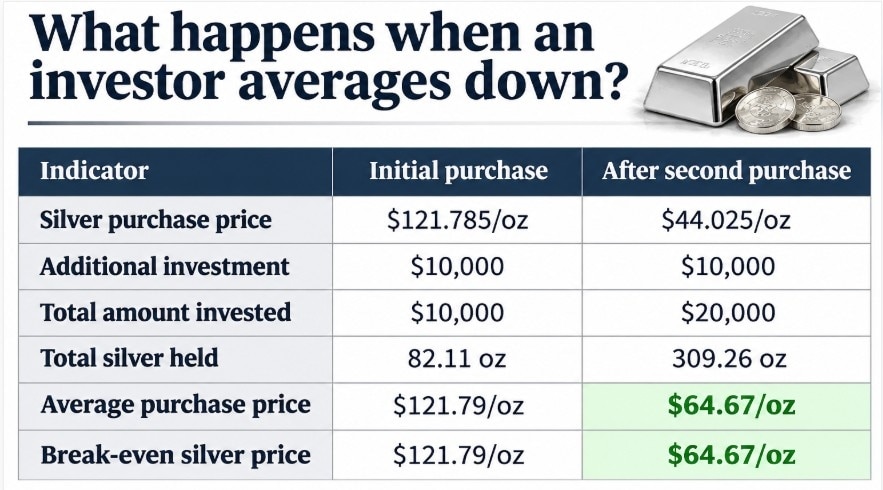
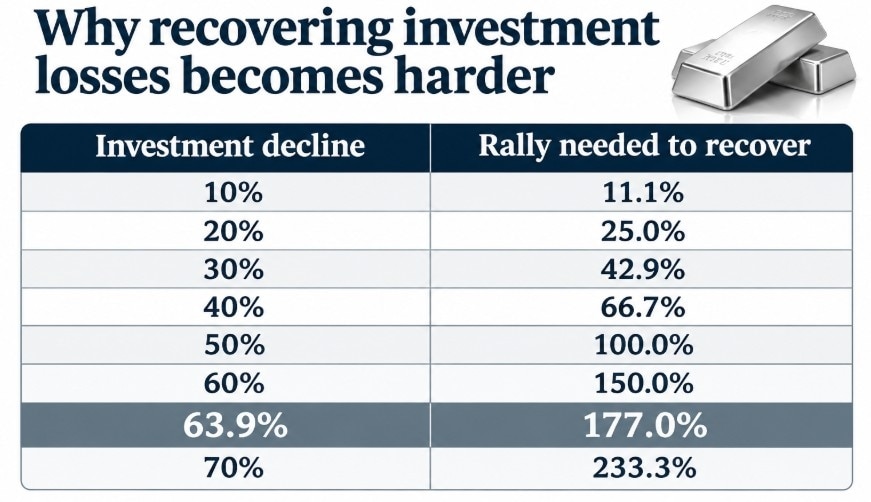
Silver's spectacular rally in early 2026 has turned into a painful lesson for investors. After touching a record high of $121.785 per ounce on January 29, the precious metal plunged to $44.025 by November 19, marking a correction of approximately 63.9% in less than ten months.
According to an analysis by Barchart, the sharp decline reflects deteriorating investor sentiment, speculative liquidation and heightened volatility, despite supportive supply-demand fundamentals.

 Bitcoin below $57,000: How 55% slump from record high stacks up against every major crypto winter since 2014
 'Look at India': Trump says US could hit 20% GDP growth if Fed cuts interest rates
 Wall St forecast shattered: Grand Theft Auto VI rakes in $3.79 billion in just 24 hours of launch
 Vedanta's Anil Agarwal outlines 3-point growth plan after PM Modi flags industry job lag. What he said
 Nifty's sharp comeback after market correction: What should investors do next as valuations turn attractive?
 Persistent Cough, Breathlessness? Doctor Explains Symptoms You Must Never Ignore Amid Pollution
 Which 2 Sectors Could Lead The Next Market Rally? Expert Reveals Top Stock Picks For Investors
 Gold & Silver Crash: What Triggered The Massive Sell-Off?
 FIIs Set To Extend India Buying; Nifty Likely To Hit Record High By December, Says Amit Goel
 Weekend OTT Releases: Dhindora 2, The Vvaan, Campus Diaries 2 & The Odyssey

 GRSE, Coforge, Lloyd Metals, BDL, Tanfac, Sambhav Steel among top 20 stocks with upto 75% upsideBitcoin below $57,000: How 55% slump from record high stacks up against every major crypto winter since 2014Nifty's sharp comeback after market correction: What should investors do next as valuations turn attractive?
 SEBI proposes FPI rule relaxation after ₹5.61 lakh crore outflows: Will foreign investors return?
 Anthropic shares plunge after record IPO: Is the global AI investment boom losing momentum?
 30 years later: The Rock comes home for WWE Survivor Series in Houston, triggers ticket surge
 Jay Mehta to sell 22.5% KKR stake to US-based Ares Management for $400 million: ReportPersistent Cough, Breathlessness? Doctor Explains Symptoms You Must Never Ignore Amid PollutionWall St forecast shattered: Grand Theft Auto VI rakes in $3.79 billion in just 24 hours of launchGRSE, Coforge, Lloyd Metals, BDL, Tanfac, Sambhav Steel among top 20 stocks with upto 75% upside