











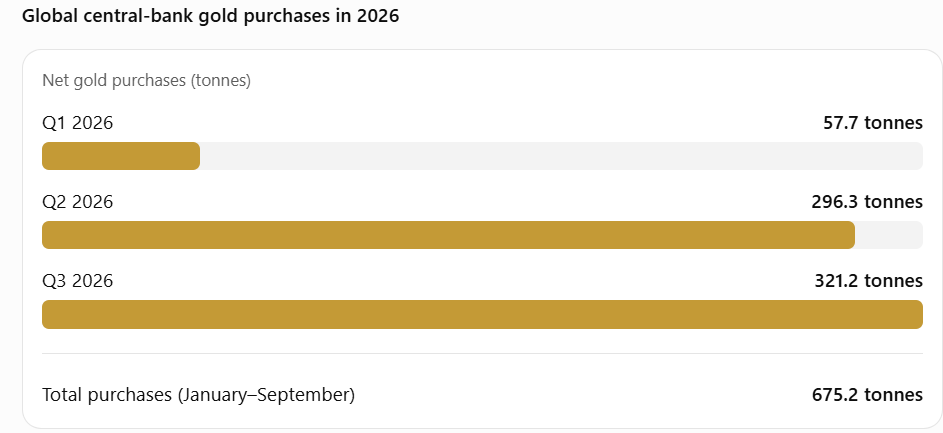



 China is currently the world’s fifth-largest official gold holder, behind the United States, Germany, Italy and France.
China's appetite for gold has reached unprecedented levels, with non-monetary gold imports rising to a record $209 billion during January-October 2026, more than double the $96.5 billion recorded in the whole of 2025. The surge has renewed discussions about China's efforts to diversify its financial assets and reduce dependence on the US dollar amid geopolitical and economic uncertainty.
According to Chinese customs data highlighted by Bloomberg, gold accounted for approximately 8% of China's total imports during the first ten months of 2026.

 Inflation risks remain tilted upwards as El Niño, seasonal demand cloud outlook: FinMin report
 India is just 15 years behind China: US economist says one of the century's biggest growth stories is unfolding
 Domestic economic activity is expected to sustain its momentum into Q3 FY27: Finance ministry
 APL Apollo-Tata Steel deal: SEBI chief flags related-party transaction rules amid governance concerns
 Is it time to pare exposure to IT stocks? What Shriram AMC's fund manager says
 Weekend OTT Watchlist: Drishyam: The Conclusion, Spider-Man: Brand New Day, Hanuman Ansh & More
 Apple HomeView Unboxing, Vivo X500 Series Hands-On, Tech News | Tech Gear EP 24 | Business Today
 Gen Z Investment Guide: Best Asset Classes To Invest In And Risks To Avoid At Age 24
 Tata Steel-APL Apollo Deal: SEBI Examines Structure, Focuses On Minority Shareholder Protection
 SEBI Eases FPI Rules: Foreign Investors May Get Market Access In Just 5 Business Days
 Is it time to pare exposure to IT stocks? What Shriram AMC's fund manager says
 SEBI approves 8 IPO: Svatantra Microfin, Sterlite Electric, Nobel Hygiene, MP Steel & 4 others get nod
 FIIs help Nifty post its best November in 21 years. More upside ahead?
 BT Closing Bell: Sensex plunges 989 pts, Nifty ends at 25,607; what Friday's market fall reflects
 M&M, Eicher Motors, Hyundai: Brokerage shares top OEM picks; outlook and more
 Healthcare industry seeks ₹1 lakh crore financing window, tax breaks in Budget 2027-28
 Gold, Silver ETFs Crash: Should Investors Hold, Buy More Or Exit Now?
 Zara, H&M Shift Orders To India: Is Bangladesh's Loss India's Garment Industry Gain?
 Silver Soars 10%, Gold Gains 4% As Commodities Stage Massive Comeback
 Government To Set Quality Standards For Cybersecurity Products Sold On GeM | What Changes?


