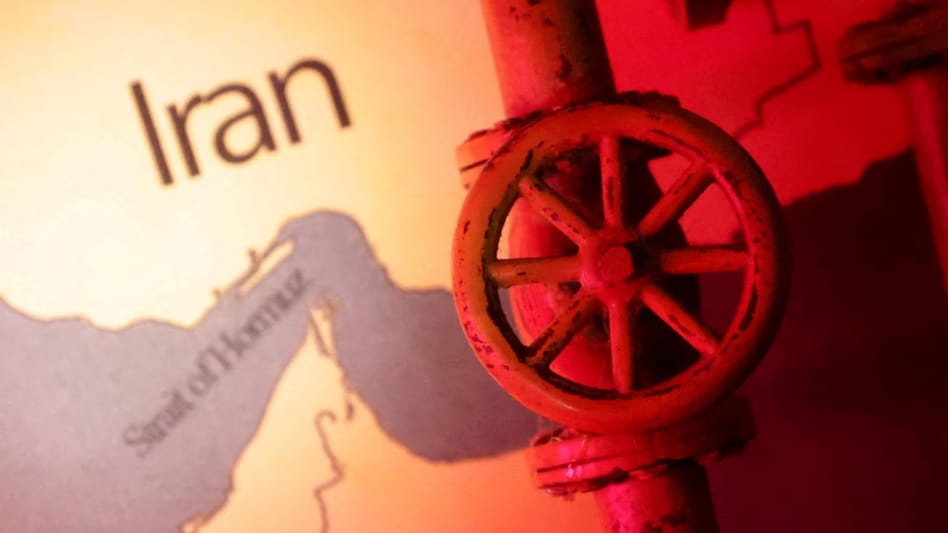
Reuters reported that an official from the European Union's naval mission Aspides said on Saturday that vessels transiting the area have been receiving direct radio warnings. Ships were told via VHF transmission from Iran's Revolutionary Guards that "no ship is allowed to pass the Strait of Hormuz".
Also read: Why Iran struck Dubai despite no official US military base
About 20% of global oil supply - roughly 21 million barrels per day - passes through this narrow waterway. The Strait links Gulf producers such as Saudi Arabia, Iran, Iraq and the United Arab Emirates to global markets via the Gulf of Oman and the Arabian Sea.
Any sustained disruption would immediately affect China, the world's largest crude importer and the biggest buyer of Iranian oil.
China's exposure creates an opportunity for Russia
China buys more than 80% of Iran's shipped oil, according to 2025 data from analytics firm Kpler. Iranian crude has limited buyers because of US sanctions aimed at cutting off funding to Tehran's nuclear programme.
Also read: Inside LUCAS: The $35,000 US kamikaze drone now used in US-Israel-Iran war
Kpler data show that China purchased an average of 1.38 million barrels per day of Iranian oil last year, representing about 13.4% of the 10.27 million barrels per day it imported by sea.
On Sunday, József Krieger, a social media user, said China can't buy oil because Iran has closed the Strait of Hormuz, and so they will buy it from the Russians. "Russia will make a lot of money from this war. If Zelensky doesn't reopen the Friendship Pipeline, we Hungarians will have enough oil. But where does Europe get oil from?"
The main Chinese buyers are independent refiners known as "teapots", clustered mainly in Shandong province. These refiners account for roughly a quarter of China's refining capacity and are drawn to Iranian barrels because of steep discounts.
If Iranian shipments are interrupted because of Hormuz restrictions, these refiners would likely turn to Russia.
However, the potential benefit to Russia hinges on how long Iran sustains its actions; if the regime collapses early or a pro-US government emerges, energy flows could normalise and diminish that advantage.
Russian crude already on the rise
Reuters reported last month that China's Russian oil imports are set to climb for a third straight month to a new record high in February.
Vortexa Analytics estimated Russian crude shipments to China at 2.07 million barrels per day for February deliveries, up from January's 1.7 million bpd. Kpler's provisional data showed February imports at 2.083 million bpd, compared with 1.718 million bpd in January.
Since November, China has replaced India as Moscow's top client for seaborne shipments. Western sanctions over the war in Ukraine and pressure to clinch a trade deal with the U.S. have forced New Delhi to scale back Russian oil imports to a two-year low in December.
Kpler data show India's Russian crude imports are estimated to fall further to 1.159 million bpd in February.
The shift has widened Russia's pricing advantage. Urals crude for January and February deliveries to China has traded at a discount of $9 to $11 per barrel below benchmark ICE Brent - the lowest in years. Urals had typically landed in India because of shorter voyage times, but Chinese refiners have increasingly absorbed those barrels.
Independent Chinese refiners remain the world's largest consumers of US-sanctioned oil from Russia, Iran and Venezuela.
"For the quality you get from processing Russian oil versus Iranian, Russian supplies have become relatively more competitive," a senior Chinese trader who regularly deals with teapots was quoted as saying by Reuters.
India's exposure to Hormuz
The Strait of Hormuz is also critical for India. Data from commodity tracking firm Kpler showed in February that India's dependence on this chokepoint has surged to around 50% of its total crude imports and has been rising in recent months. So far this year, India imported nearly 2.6 million barrels per day from Gulf countries in 2026 till 24 February.
If Hormuz remains restricted, supply disruptions could lift global prices. But for Russia, already exporting record volumes to China, the redirection of demand away from Iranian barrels could provide an additional boost.
(With inputs from Russia)



 Iran’s Hormuz move may redirect oil flows - and favour Russia
 Will RBI raise interest rates in October? Here’s what experts have to say
 Bitter Friday for Nestlé: Russia seizes assets as Moscow targets Western firms over Ukraine support
 West Asia impact: Saudi Aramco halts European crude allocations after East-West pipeline attack
 Tata Electronics partners with Japanese, Malaysian firms to boost semiconductor manufacturing in India
 From selling gold to spending ₹3.5 lakh: iPhone 18 Pro fever hits India as fans queue up on sale day
 “Unacceptable And Unprofessional”: MEA Rejects Pakistan’s Claims Over INS Kolkata Collision
  Commodity Trading For Beginners: How MCX & NCDEX Work | Trading Basics | Money Today
 US Fed Rate Hikes A Headwind For Foreign Flows? | Jibi Jacob | Jefferies
 ₹25 Billion FII Outflow: What Could Bring Foreign Investors Back? | Jefferies' Jibi Jacob
 India’s Private CapEx Picks Up: Christopher Wood On The Market Outlook
 Jindal Supreme, SS Retail, Hero Motors IPOs subscribed up to 181 times on final day; details here
 Sensex, Nifty post sixth weekly loss; TCS, Titan among top laggards, slip up to 4%
 How AI collapse could benefit Indian equity market; Jefferies' Christopher Wood explains
  Banks are no more secular growth story, prefer NBFCs: Chris Wood
 Jefferies' Christopher Wood sees gold at $10,000 'sooner or later'; likes India's small, midcaps
 Air India's incoming CEO weighs merging budget arm AI Express to rein in swelling costs: Report
 Darkness at 9 pm: Pakistan shuts markets, slashes allocations amid severe fuel & gas crisis
 What Will Define the Next Generation of Finance Leaders?












