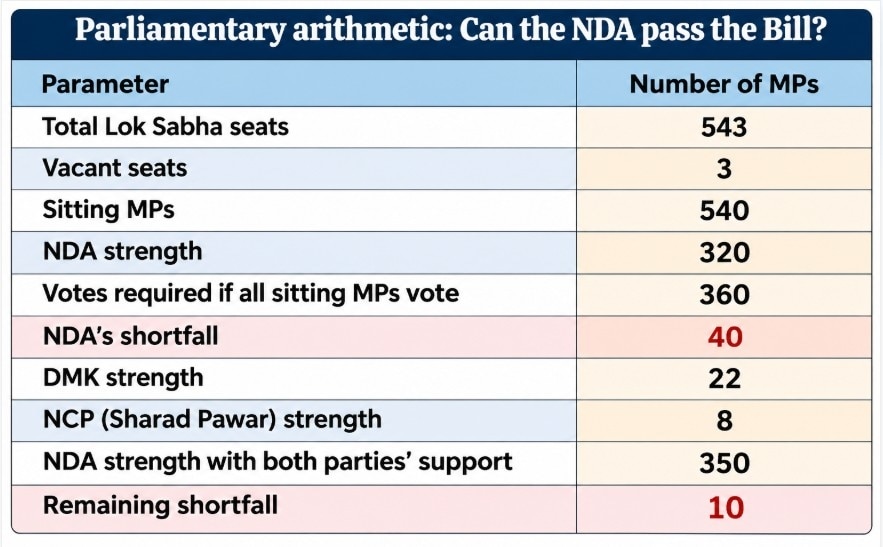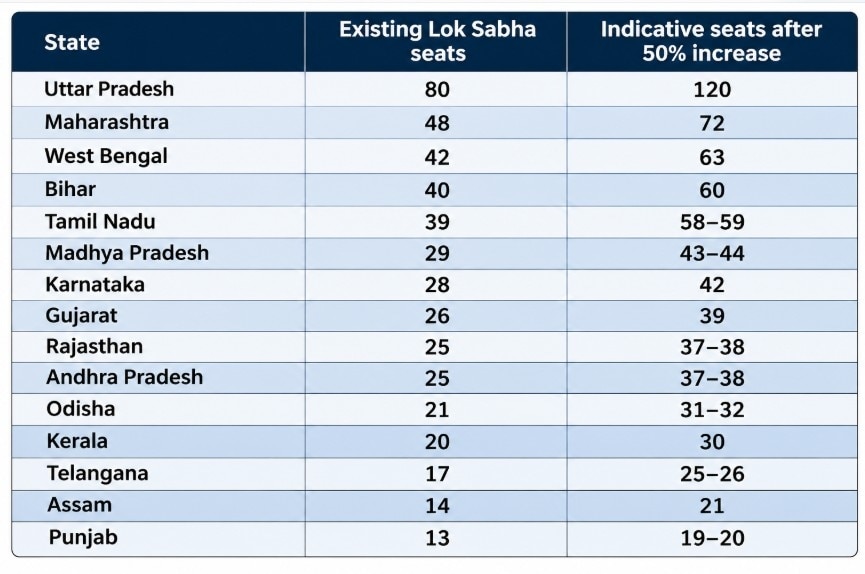



 The Lok Sabha currently has 543 elected seats. A uniform 50% increase could take its strength to around 815 members, subject to the final allocation formula.
India could witness one of its biggest electoral transformations in decades as the Centre prepares to introduce a revised legislative framework proposing a uniform 50% increase in Lok Sabha seats across states and Union Territories, alongside the implementation of 33% reservation for women.
The Union Cabinet on Friday cleared the revised Constitution (132nd Amendment) Bill, 2026, seeking to raise the constitutional ceiling of Lok Sabha membership to 850 while protecting states' existing relative representation until the relevant figures of the first Census conducted after 2051 are published.

 Domestic economic activity is expected to sustain its momentum into Q3 FY27: Finance ministry
 Nifty is 'daal chawal', global investing is 'pizza and noodles': How much should you invest overseas?
 Inflation risks remain tilted upwards as El Niño, seasonal demand cloud outlook: FinMin report
 India's banks face a funding challenge as loan growth races ahead of deposits
 India is just 15 years behind China: US economist says one of the century's biggest growth stories is unfolding
 REITs & INVITs Tax Explained: Which Income Components Are Taxable And Which Are Tax-Free?
 Gen Z Investors And FOMO: How Peer Pressure And Herd Mentality Can Hurt Long-Term Wealth Creation
 REITs, InvITs, Debt Or Dividend Stocks: Which Is Better For Regular Income And Tax Efficiency?
 I.T. Stocks Not Doomed, But Growth Challenged For 12–18 Months: Prateek Nigudkar
 Weekend OTT Watchlist: Drishyam: The Conclusion, Spider-Man: Brand New Day, Hanuman Ansh & More

 Is it time to pare exposure to IT stocks? What Shriram AMC's fund manager says
 SEBI approves 8 IPO: Svatantra Microfin, Sterlite Electric, Nobel Hygiene, MP Steel & 4 others get nod
 FIIs help Nifty post its best November in 21 years. More upside ahead?
 BT Closing Bell: Sensex plunges 989 pts, Nifty ends at 25,607; what Friday's market fall reflects
 M&M, Eicher Motors, Hyundai: Brokerage shares top OEM picks; outlook and more
 India's living standards could double every 12 years: What sustained 6% per-capita growth could deliver
 ₹59,999 for a cleaning robot? Haier's new machine can even wash its own mop
 ₹1.20 lakh for a Vivo phone? This 200MP camera flagship has a surprise for Indian buyers
 1 million satellites in space? Elon Musk's AI plan has a surprising twist
 Want to prepare for Avengers: Doomsday? Here are 14 movies and 1 show to watch