
Search
Advertisement
17% with a deal, 25% without one: Is Trump using tariffs to force India's hand in trade negotiations?

17% with a deal, 25% without one: Is Trump using tariffs to force India's hand in trade negotiations?

Washington's proposed tariff differential of eight percentage points puts India under pressure to finalise a bilateral trade agreement. While a 17% deal rate could benefit exporters, GTRI warns that tariff relief may come at the cost of unilateral trade concessions.

Business Today Desk
Business Today Desk
  • Updated Nov 26, 2026 6:55 AM IST
17% with a deal, 25% without one: Is Trump using tariffs to force India's hand in trade negotiations?India's proposed 17% deal rate offers a marginal headline tariff advantage over several competing manufacturing economies.

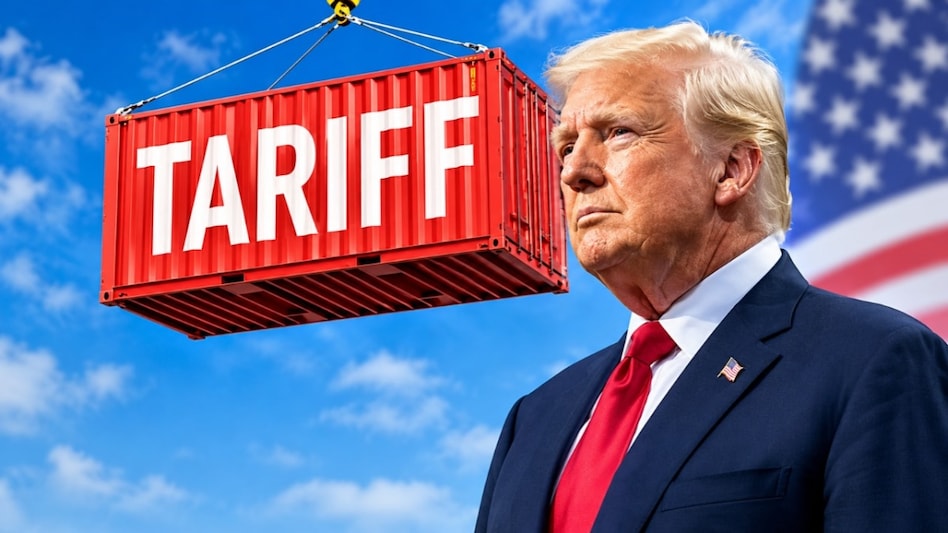
India faces a fresh negotiating challenge as the Donald Trump administration proposes a dual-rate tariff framework that could impose duties of up to 25% on Indian exports without a bilateral trade agreement, compared with 17% if a pact is finalised.

The eight-percentage-point differential creates a financial incentive for New Delhi to conclude negotiations, even as concerns emerge over the potential economic costs of granting trade concessions to Washington.

Advertisement

According to the Global Trade Research Initiative (GTRI), the proposed Section 301 tariffs, ostensibly aimed at addressing structural industrial overcapacity, effectively revive Washington's reciprocal tariff regime under a different legal framework.

The Office of the United States Trade Representative (USTR) has proposed tariffs targeting 14 economies following investigations launched in March 2026.

Under the framework, countries without trade agreements face higher baseline duties, while those concluding agreements could secure preferential rates.

For India, the difference between the two proposed rates could have significant implications for exporters. On an illustrative shipment valued at $100,000, a 25% tariff would translate into duties of $25,000, compared with $17,000 under the proposed deal rate, assuming the same taxable value and excluding other applicable duties.

Advertisement

MUST READ: USTR schedules public comments and hearings in January 2027 on section 301 investigations

Although tariffs are paid by US importers, the additional costs could translate into pricing pressure, demands for discounts and narrower margins for Indian exporters.

How India compares with export competitors

India's proposed 17% deal rate offers a marginal headline tariff advantage over several competing manufacturing economies.

Bangladesh, Cambodia, Indonesia, Malaysia and Thailand face proposed deal rates of 18%, while Vietnam and China face 20%. China's rate would be imposed alongside existing 2018 Section 301 tariffs.

Trump's proposed tariffs: India vs other trading partners

Country/region Tariff without deal (up to) Tariff with deal Potential relief
India 25% 17% 8 pp
China 40% 20%* 20 pp
Vietnam 35% 20% 15 pp
Bangladesh 20% 18% 2 pp
Cambodia 25% 18% 7 pp
Indonesia 25% 18% 7 pp
Malaysia 25% 18% 7 pp
Thailand 25% 18% 7 pp
South Korea 25% 15%** 10 pp
Taiwan 25% 15%** 10 pp
European Union 20% 15%** 5 pp
Japan 20% 15%** 5 pp
Switzerland 20% 15%** 5 pp
Singapore 20% 10% 10 pp

However, tariff differentials alone may not determine export competitiveness. Manufacturing costs, logistics efficiency, productivity, existing duties and supply chain capabilities also influence global sourcing decisions.

Advertisement

GTRI argues that the marginal tariff advantage is designed to encourage India to conclude an agreement.

ALSO READ: US proposes at least 17% tariff on Indian imports if trade deal is signed, 25% if no deal is reached

What could India lose by accepting a deal?

While lower tariffs could provide immediate relief to exporters, the broader economic implications would depend on the market access and policy concessions sought by Washington.

GTRI contends that countries could secure lower duties by granting unilateral trade concessions without necessarily addressing the industrial capacity that triggered the investigations.

The think tank has also warned that the potential threat of Graham tariffs of up to 100% remains an additional source of uncertainty.

India's negotiating dilemma

Washington's investigation has flagged potential excess capacity or export surpluses across seven Indian manufacturing sectors, including solar modules, steel, textiles, petrochemicals and automotive products.

GTRI recommends that India defend its industrial expansion sector by sector rather than accept a one-sided agreement.

For New Delhi, the challenge is to secure competitive access to the US market while preserving domestic policy flexibility, protecting manufacturing interests and ensuring that short-term tariff relief does not come at the expense of long-term economic priorities.

ABOUT THE AUTHOR

Business Today Desk
Business Today Desk

Business Today brings you the latest news, views and analysis from the world of finance, economy, markets, corporates, startups, tech, and the digital economy. You can find everything from breaking news to deep dives to immersive essays and more on a variety of subjects across all formats - online, magazine, television, data visualisation, et al.

Published on: Nov 26, 2026 6:55 AM IST




