








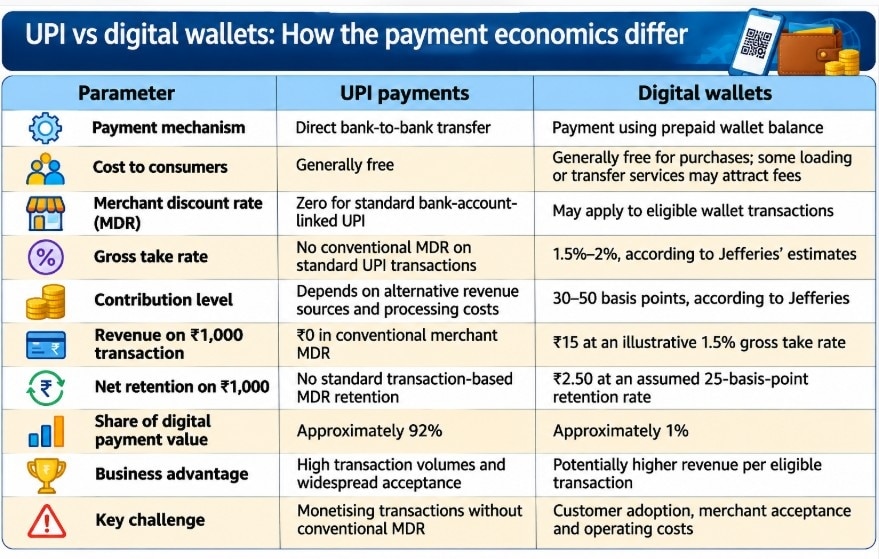



 According to a Jefferies, UPI accounts for approximately 92% of India's digital payment transaction value, while wallets represent just 1%.
The Reserve Bank of India's decision to grant in-principle approval to Paytm Payments Services Ltd (PPSL) to operate prepaid payment instruments, including digital wallets, has reopened a crucial debate: how can fintech companies make money from digital payments when UPI transactions are largely free?
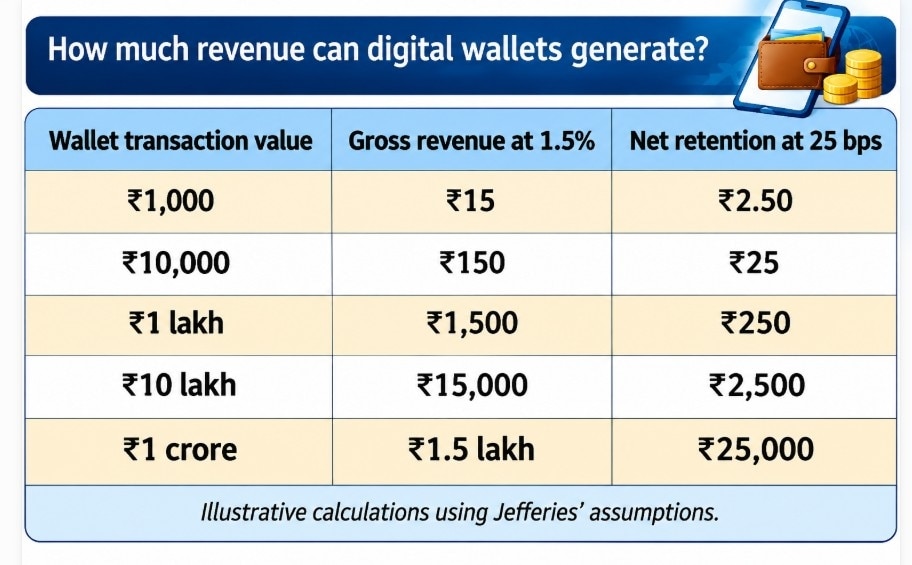
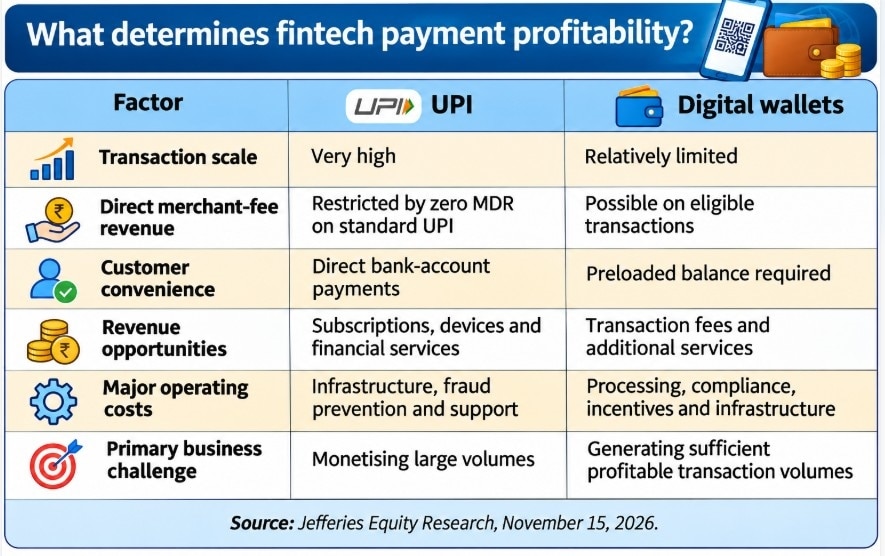
The development comes as payment platforms seek sustainable revenue models beyond transaction volumes. According to a November 15 report by Jefferies, UPI accounts for approximately 92% of India's digital payment transaction value, while wallets represent just 1%. Yet wallets can generate gross take rates of 1.5%–2%, making them commercially attractive despite their smaller market share.

 'I wouldn't mind Jensen Huang's return': Trump backs Nvidia founder, questions Chinese spy claims
 Blue chips are back in vogue as Nifty aims high
 Meesho CEO Vidit Aatrey buys Rs 83.81 crore Bengaluru property from BYJU'S founder's family
 Amid market volatility, EPFO looks to tweak redemption policy for ETF units
 The leadership ladder: The career lessons no one teaches women
 How Westside Is Winning India's Festive Fashion Market?
 Piyush Goyal Calls For India-Egypt Startup Collaboration In AI, Tourism & Green Tech
 Silver Prices Crash 60% From January Peak | Is It Time To Buy Silver? Gold vs Silver
 Budget 2027 Wishlist | BTTV Sources: Markets Push For LTCG Tax Scrap Ahead Of Pre-Budget Meet
 Stock Market Outlook: Key Triggers That Could Move Dalal Street
 Blue chips are back in vogue as Nifty aims high
 Senco Gold shares plunge 8%; is there more pain ahead?
 Hindustan Oil Exploration shares zoom 35% in four sessions; what analysts say
 Sensex, Nifty resume climb in volatile trade; what lies ahead for markets?
 Nifty Bank hits record closing high, Bank of Baroda sole loser
 Hybrid SIFs control 70% of industry assets: Why investors are looking beyond pure equity strategies
 Financial Horoscope Today, November 17, 2026: Virgo Signs to Receive Tremendous Financial Gain, Know the Fate of Other Signs
 Microsoft outage exposes risks of technology dependence. Can Indian enterprises break free of Microsoft?
 Luxury homes before highways: Why Gurugram developers are betting big on future connectivity
 RBI cancels registration of 49 NBFCs amid plans to tighten private equity ownership rules