


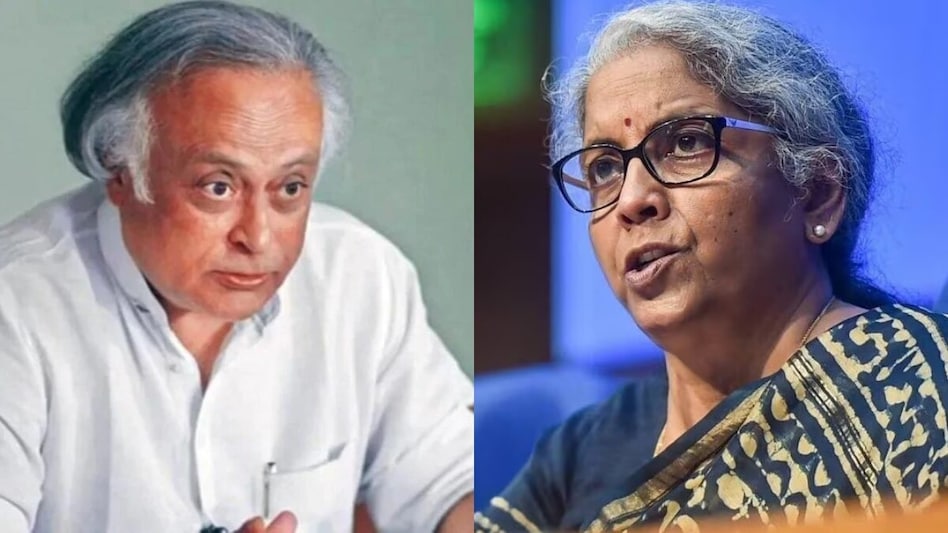
 'Before spreading a canard': FM Nirmala Sitharaman rebuts Jairam Ramesh's UPI fee claim
Finance Minister Nirmala Sitharaman on Thursday slammed Congress leader Jairam Ramesh over his claim that the government was paving the way to impose charges on all UPI transactions.
She said the Congress leader was spreading a "canard" and clarified that any Merchant Discount Rate (MDR), if introduced, would apply only to merchants and not to customers.

 BRICS 2026: PM Modi says Summit will spur meaningful talks for world welfare
 BRICS nations must open markets for each other’s products, ease up clearances: Piyush Goyal
  Hack-for-hire operations allegations: US lawmakers urge Lutnick to sanction 3 Indian tech firms
 NSE IPO to take 2026 IPO fundraising past Rs 1 lakh crore, 3rd year in a row, 4th overall
 BRICS Summit 2026: Huawei, Alibaba, Emirates among names likely at PM Modi's business forum address
 Crypto to Mutual Funds: Gen Z’s Surprising Investment Shift
 Gen Z Investors: Smart Investing Or Risky Game? Experts Decode The New Money Mindset
 Can BRICS Share Data Without Sharing Control? RITES CMD Rahul Mithal On MAITRI
 India’s Hidden Gems Could Unlock A $500 Bln Export Opportunity: ICIB’s Manpreet Singh
 China Is Not Just A Rival, It’s A Market For Indian Companies Says ICIB President Manpreet Singh
 Raymond shares rally over 57% in two weeks; what's fuelling the surge?
 Glass Wall Systems (India) IPO: 3 Ways to allotment status; odds of getting shares & latest GMP
 Prasol Chemicals IPO: How to check allotment status on BSE, NSE & Kfin; odds of getting shares & GMPNSE IPO to take 2026 IPO fundraising past Rs 1 lakh crore, 3rd year in a row, 4th overall
 Vedanta, Tata Steel, Nalco, other metal stocks fall as Nifty Metal slips 2%; what's weighing?Raymond shares rally over 57% in two weeks; what's fuelling the surge?Glass Wall Systems (India) IPO: 3 Ways to allotment status; odds of getting shares & latest GMP
 Operation Economic Outcast: Scott Bessant says major bank in sanction crosshairs for helping Iran
 Instagram rolls out new feature to add tagged posts to your profile grid: Here’s how it works
 'Haiwaan' movie Twitter review: 'Filling Mohanlal's shoes is never easy,' say netizens on Akshay-Saif film












