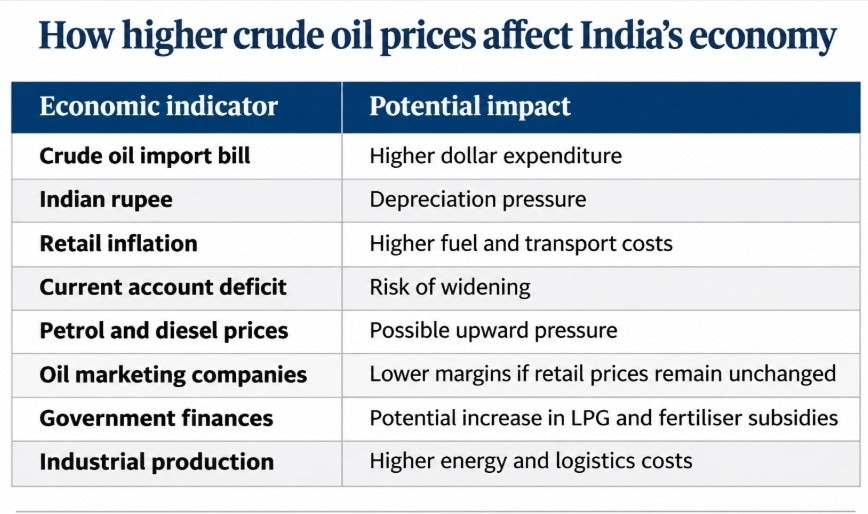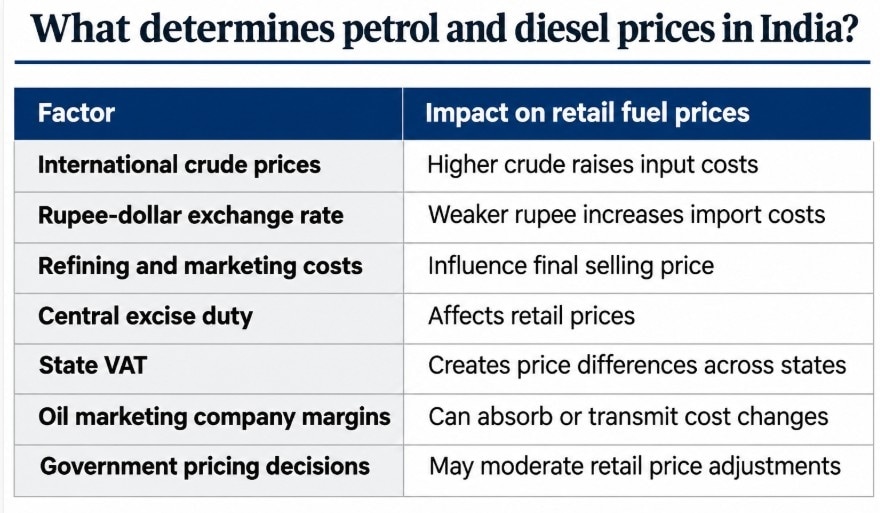



 India imports more than 85% of its crude oil requirements, making domestic energy costs sensitive to international price movements.
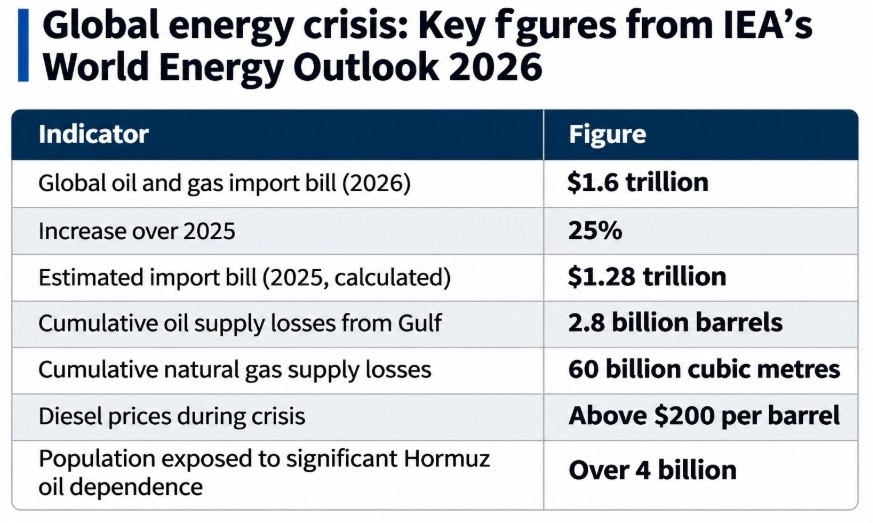
Global spending on imported oil and natural gas is projected to surge 25% to $1.6 trillion in 2026, even as demand weakens, according to the International Energy Agency (IEA). For India, which relies heavily on imported crude, elevated energy prices could intensify inflationary pressures, weaken the rupee and strain government finances.
The IEA's World Energy Outlook 2026 highlights how disruptions in the Strait of Hormuz have reshaped global energy markets, exposing oil-importing economies to higher costs and supply uncertainties.

 India to power over 90% of South Asia's export growth: Can it become the region's manufacturing hub?
 EPFO approves systematic withdrawal plan (SWP): Retirees can receive monthly payouts while earning interest -- details here
 Don't take 140 crore Indians for granted! PM Modi's stern warning to India Inc over quality of products
 New cars need PUC checks only once every three years; BS-IV vehicles every six months
 Where are the jobs and higher wages? PM Modi questions India Inc over massive corporate tax cuts
 Why Are Tata's Top Leaders Stepping In As Air India Struggles With Losses And A Long Turnaround Now?
 GE Sends 15th F404 Engine To India: Can HAL Deliver Tejas Mark-1A By March 2027?
 What Is Siemens S3 Passenger? The Technology Transforming Railway Ticketing & Reservations
 'Daughter Is Not A Guest': Kapil Sibal On TVS Family Dispute & Equal Inheritance Rights
 Gold At 14-Month Low! Is This The Right Time To Buy? | Surendra Mehta, IBJA

 FIIs pump over ₹1 lakh crore into Indian equities in November as Nifty crosses 25,500
 Anthropic's $1.5 trillion valuation surpasses combined m-cap of India's top 10 companies
 Aurionpro Solutions wins Rs 100-crore order for AI-ready data centre in Southern India, check stock reaction
 Poonawalla Fincorp to issue non-convertible debentures worth up to Rs 500 crore
 Punjab National Bank shares close 4% higher as Moody's affirms Baa3 ratings
 Global oil and gas import bill to hit $1.6 trillion: Why India remains vulnerable to price shocks
 'Write to me openly about reforms still needed': PM Modi tells India Inc
 Delhi-NCR cab fares surge from Rs 300 to Rs 800 as taxi, auto strike pushes up demand during office hoursFIIs pump over ₹1 lakh crore into Indian equities in November as Nifty crosses 25,500
 How a 5-year-old AI company is now worth more than India Inc’s top 10 combined! Check Details