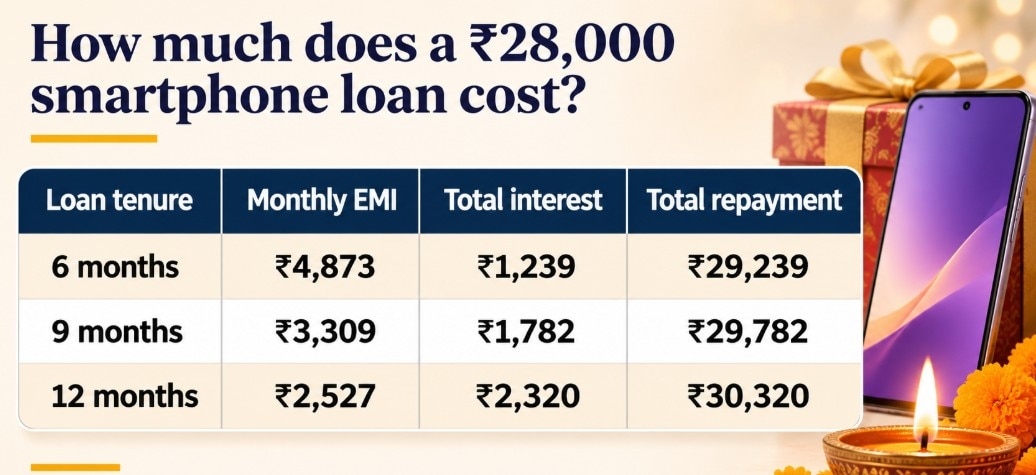









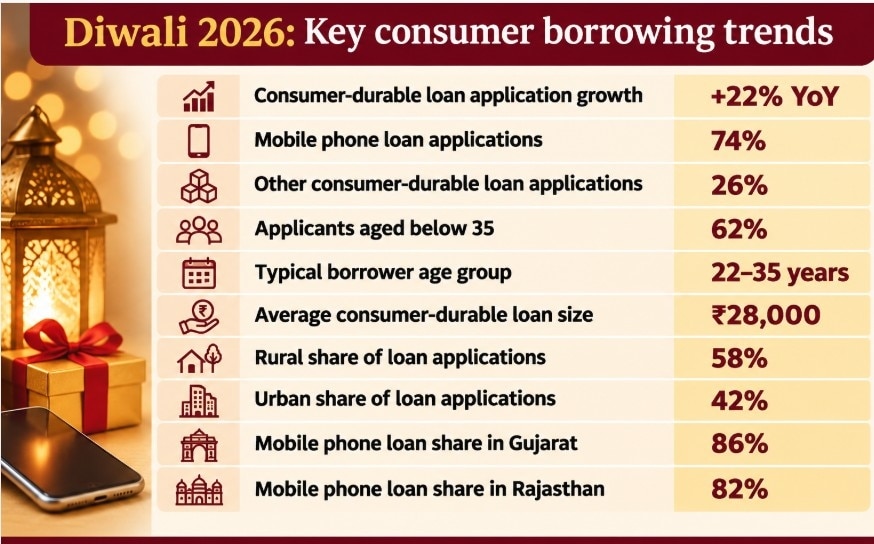



 Lentra data shows consumer-durable loan applications rose 22% year-on-year during Diwali 2026, led by mobile phones.
Mobile phones accounted for 74% of consumer-durable loan applications during Diwali 2026, highlighting the growing role of credit in festive shopping. Young consumers dominated borrowing, with 62% of applicants aged below 35, according to Lentra's latest data.
India's festive shopping season is increasingly being driven by easy access to credit, particularly for smartphones and electronic gadgets. Data from digital lending technology platform Lentra shows that consumer-durable loan applications increased 22% compared with the previous Diwali, with mobile phones emerging as the dominant category.

 India to impose 162.5% duty and tax on bulk Scotch imports amid UK trade pact dispute: Report
 Goldman Sachs sees three more RBI rate hikes; feels rupee's worst is over and Nifty at 28,500
 PSU banks post record Rs 1.09 lakh crore profit in H1 FY27, bad loans hit new low
 Sensex, Nifty retreat from 9-month highs; why markets fell and what's next?
 Only 2 in 10 managers trained to lead multigenerational teams, finds survey
 TVS Family Dispute Explained: Kapil Sibal On Control, Ownership And Inheritance Law
 Vivo X Fold 6 Review: Is This ₹2.2 Lakh Foldable Worth Buying?
 Tata Group Rift Deepens: Khambata's Letter, Jimmy Tata's Stand Add To Tensions
 Nvidia Q3 Results: Revenue Doubles, Board Rejects Jensen Huang's Return | What's Next?
 Samvat 2083: Which Asset Classes Will Create Wealth This Year?

 PSBs' net profit rises 16.9% in H1 FY27; key numbers and stock market trendsSensex, Nifty retreat from 9-month highs; why markets fell and what's next?
 Lupin shares: US sales decline priced in; risk-reward favourable; target price
 SpiceJet board approves Rs 5,500 crore fundraise; stock closes 5% higher
 Waaree Energies, Premier Energies, Emmvee shares: Target prices, top pick
 US F-1 visa update: International students can stay beyond four years without extensions
 Bank seizes truck despite regular EMI payments, consumer commission orders ₹5 lakh compensation
 Jeff Bezos takes charge of James Bond: Why Amazon's $8.45 billion MGM deal matters for the 007 franchise
 Did entire Australian team know about Sandpapergate? Bancroft's claims put Pat Cummins in spotlight
 PM Modi meets Prince William and Princess Catherine, discusses India-UK partnership