


 For retail investors, the key takeaway is that domestic gold and silver ETF returns depend on more than global commodity prices.
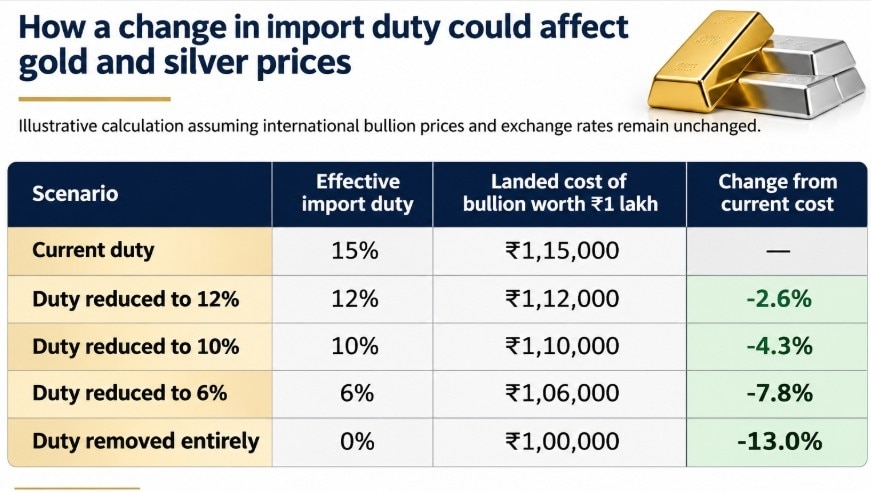
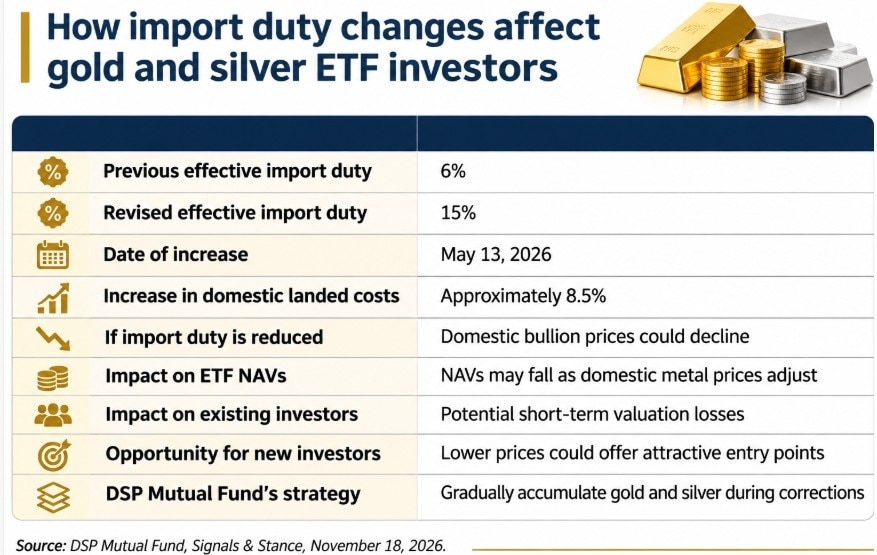
Investors in gold and silver exchange-traded funds (ETFs) may need to watch government import duty decisions as closely as international bullion prices. According to DSP Mutual Fund, changes in customs duties can directly influence domestic precious metal prices and, consequently, the net asset values (NAVs) of ETFs holding these commodities.
In its Signals & Stance report dated November 18, 2026, DSP Multi Asset Omni Fund of Funds highlighted the possibility that a reduction in import duties could trigger a correction in domestic gold and silver prices, potentially creating fresh investment opportunities.
 Spicejet crisis: FIP seeks urgent govt intervention; warns delayed salaries could cause financial anxiety, stress among pilots
 'Bigger rewards, tougher reviews': Microsoft Azure changes pay rules as AI competition heats up
 India, EU likely to sign FTA in December, says official ahead of PM Modi's Brussels visit
 'Had we ignored PM Modi's advice...': Traders thank PM Modi in open letter as gold price falls ₹65 lakh per kg
 Alice Huang was just the public face: Who allegedly ran the Nvidia chip smuggling network to China?
 Gold And Silver Outlook: Expert Explains Why Investors Should Avoid Heavy Buying Now
 REITs Delivered 15% Returns: Is Commercial Real Estate India's Next Big Investment Bet?
 Dollar Vs Rupee: Why Expert Expects INR To Stabilise Around 94 In 2027
 Health Insurance Premiums: Do Delhi And High-Pollution Cities Pay More? Siddharth Singhal Explains
 Pollution-Linked Diseases: 3 Health Insurance Checks You Must Make To Ensure Adequate Coverage

 IPO rush to continue in 2026: Avaada Electro, Razorpay, Sembcorp Green among big issues; key details
 RIL shares at six-month high, up 20% from 52-week low; here's what analysts say
 NSE’s dominance in India’s capital market
 Goldman Sachs sees crude easing to $78 by late 2027 despite ongoing West Asia tensions. Here's why
 Markets Next Week: Nifty eyes 26,000 as FIIs pour in record Rs 1.12 lakh crore; will banking rally extend? Key triggers to watch
 vivo Watch GT 2 vs Apple Watch Series 12: Similar design, but how do their features compare?
 This nurse quit her 9-to-5 after making Rs 82 lakh in 7 months from content creation. Here's how
 BT BIG STORY: India’s growth story faces a twin squeeze from inflation and the rupee
 Africa overtakes Asia in visa-free access for Indians: Could it become the next holiday hotspot?
 Foreign tourists came to see the Ganga, ended up cleaning the plastic Indians left behind at Rishikesh ghat