











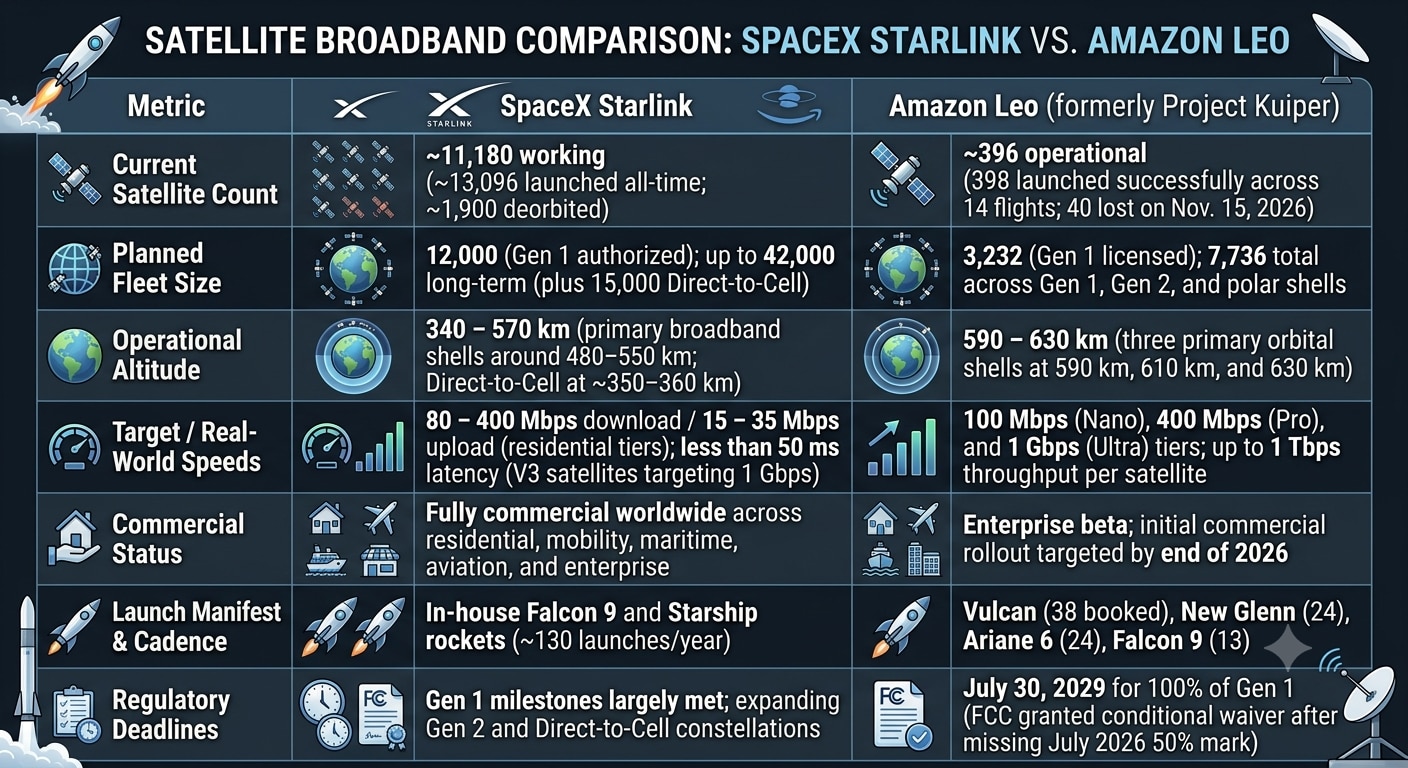



 Formerly known as Project Kuiper, Amazon Leo is built to rival SpaceX Starlink. However, the November 2026 launch loss underscores the massive scale gap between the two networks.
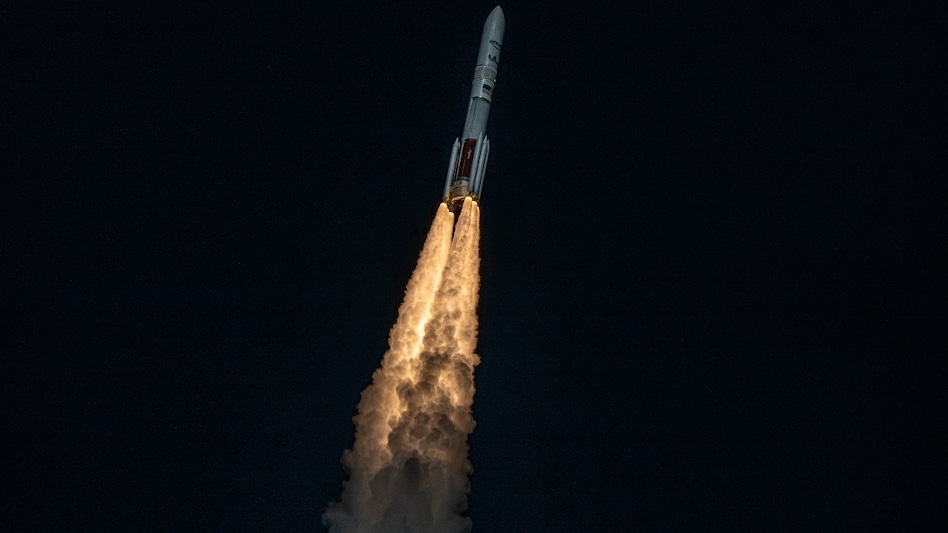
Amazon lost 40 broadband satellites on Sunday, November 15, after a United Launch Alliance (ULA) Vulcan Centaur rocket suffered a mid-flight anomaly roughly 10 minutes after liftoff.
The failure marks the first outright mission loss in ULA’s 20-year history and deals a significant schedule blow to Amazon Leo — the tech giant's satellite internet constellation competing against SpaceX Starlink, which already commands a massive lead in low-Earth orbit.

 Jimmy Tata breaks silence, backs N Chandrasekaran and Tata Sons listing against Noel Tata: Report
 BT BIG STORY: AI helps, but concierge is still a very human business
 Jensen Huang eyes Nvidia comeback as Silicon Valley allies launch 'war room': Report
 YES Bank shares in focus as lender files review petition in SC over Rs 8,415 cr AT-1 bonds
 BEL share price: Defence PSU stock in focus on Rs 619 crore order win; key details
 PM Modi Highlights 5 Agricultural Revolutions Transforming India's Farming Sector
 FDs Vs Equity: Should Women Rethink Their Investment Strategy To Achieve Long-Term Financial Goals?
 Gold Jewellery vs Gold ETFs: Which Is Better for Investment? Mrin Agarwal Explains
 PM Modi Criticises Past Governments Over Farmers’ Welfare At Agriculture Conclave
 SIP Strategy: Should You Continue, Increase Investments Or Rebalance Your Mutual Fund Portfolio?

 Bank Nifty nears record high, analyst says short-term consolidation likely
 Adani Power, AEL shares among six Adani stocks with 'Buy' ratings from Jefferies; here's why
 Mahanadi Coalfields IPO: Coal India subsidiary targets Rs 90,000 crore valuation; issue details here
 Paytm stock nears 52-week high on preliminary RBI nod for wallet licence
 TMPV shares drop 8%; targets post Q2 loss, JLR guidance cut; Citi, UBS say 'Sell' stock
 No PUC, no fuel & ₹10,000 fine: Gurugram turns fuel pumps into checkpoints with 300 new cameras
 Apple wants a thinner iPhone Duo 2, but Face ID and Action Button upgrades pose challenges: Report
 Delhi AQI today: Capital breaths easy on Chhath as air quality improves to ‘poor’ categoryBank Nifty nears record high, analyst says short-term consolidation likely
 Apple launches AI health study app as more people turn to chatbots for medical answers


