


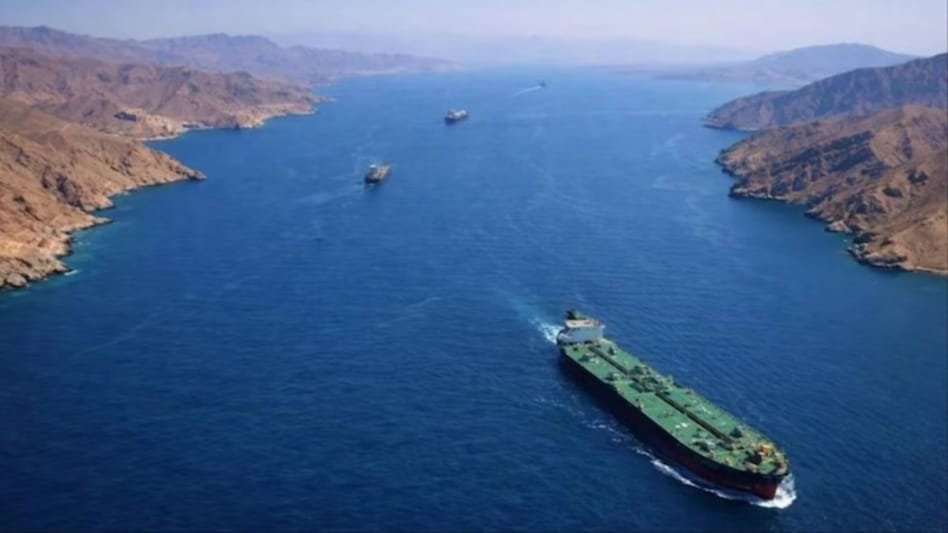
 So far, eleven Indian ships have successfully crossed the strait under heightened vigilance.
 In the wake of a tense maritime incident involving Iran’s Islamic Revolutionary Guard Corps (IRGC), the Indian Navy has significantly strengthened its security posture near the Strait of Hormuz, one of the world’s most critical oil transit routes.
The move follows an April 18 episode in which IRGC personnel reportedly fired upon two Indian-linked commercial vessels — Jag Arnav and Sanmar Herald — forcing them to abort their passage through the narrow waterway.

 What is Pickaxe Mountain? Inside the Iranian nuclear site being threatened by Trump
 China’s oil use drops sharply: Expert says EV shift is changing global energy demand
 US debt hits $40 trillion: Why India should worry about rising yields, rupee and capital flows now
 From HUL to local jewellery brands: Bigg Boss creates a two-tier advertising ecosystem
 WMO warns El Niño could intensify through February 2027: What it means for India? Check here
 #DemocraticNewsroom | '800 Million People On Subsidies': Siddharth Zarabi On India’s K-Shaped Economy
 #DemocraticNewsroom | India Inflation Data: Are Official Numbers Hiding The Real Economic Picture?
 GDP Real Or Fudged? Siddharth Zarabi Defends India’s Growth Numbers With Data
 Financial Planning For Couples: How To Build A Strong Financial Plan, Budget & Wealth Together
 “High Sugar, Salt, Fat”: FSSAI CEO On Proposed Red Warning Labels On Food Packs
 56% rally in TBZ stock: Upper circuit led to record high today; here's why
  Sensex, Nifty snap four sessions of losing streak; RIL, Tata Steel, Bajaj Finance boost sentiment
  Physicswallah shares jump 9% as Motilal Oswal sees 66% upside
 KEC International: At 52-week low, Geojit expects more downside in infra stock
 NSE IPO update: SEBI approval likely next week; Check expected dates of price band and listing
 Big bond shake-up ahead? Norway’s $2.3 trillion fund may slash Treasury holdings by $75 billion
 ‘Lower the rate or I’ll stop...’: Donald Trump links US trade deficit to Fed rate cutsWhat is Pickaxe Mountain? Inside the Iranian nuclear site being threatened by Trump
 Nepal flash floods: Death toll tops 1,300, 5-year-old among 169 Indians rescued so far
 Quote of the Day by Narayana Murthy : ‘The future of any corporation is as good as the value system of the leaders and followers in the organization’












