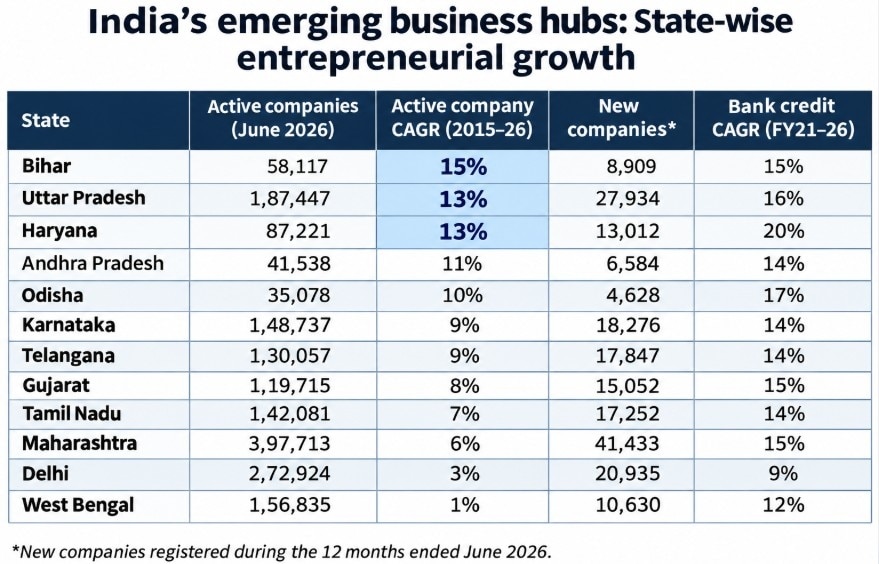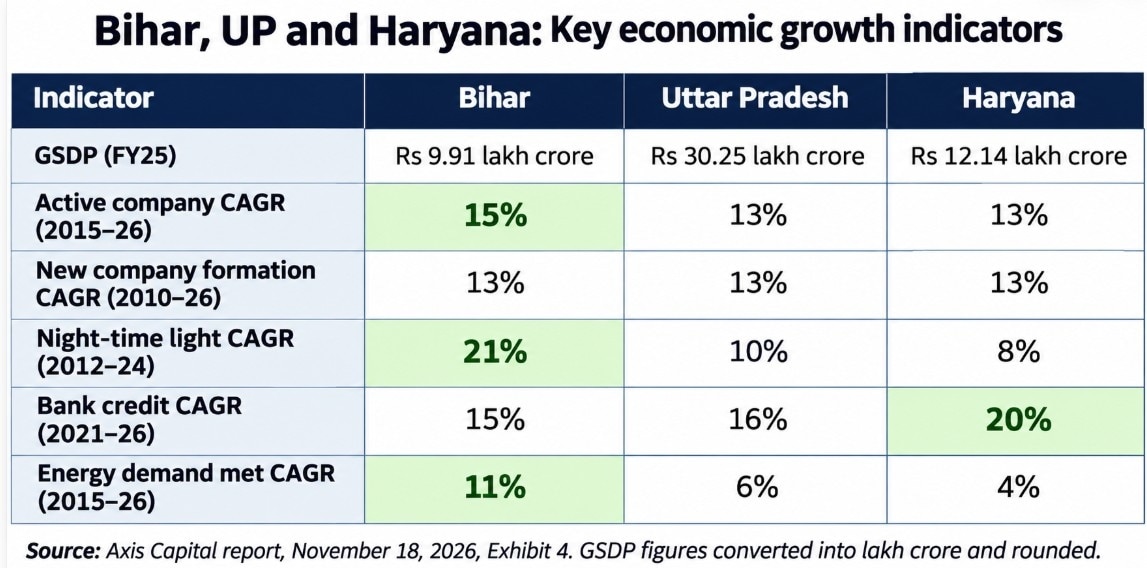



 Between 2015 and 2026, Bihar recorded a compound annual growth rate (CAGR) of 15% in active companies, followed by Uttar Pradesh and Haryana at 13% each.
India's entrepreneurial landscape is undergoing a geographical transformation, with traditionally underpenetrated states such as Bihar, Uttar Pradesh and Haryana recording faster growth in active companies than established business centres. Improved infrastructure, greater access to capital and supportive government policies are helping create new economic hubs beyond the country's traditional metropolitan centres.
According to a report by Axis Capital, titled India’s enterprise wave – Everything, everywhere, all at once, new company registrations surged 37% year-on-year to 2.48 lakh in FY26, marking the fastest growth in two decades. The number of active companies reached 21 lakh, with annual growth accelerating to 12% in June 2026.

 US plans fresh tariffs on India, China and other economies over industrial subsidies: Report
 Nasdaq falls as Nvidia slides over 7%, AI stocks retreat after Monday's sharp Wall Street rally
 Nvidia CFO Colette Kress kept out of secret talks over Jensen Huang's return as CEO: Report
 Bisleri says all 143 plants comply with FSSAI norms: What consumers should know about the safety row
 Tata Steel-APL Apollo Tubes deal triggers concerns on X; here's what social media users say
 Silver Hallmarking Push: IBJA Seeks Mandatory Standards, Gold Adulteration Raises Legal Concerns
 Gold, Silver Outlook: Expert Recommends Staggered Buying, Reveals Portfolio Allocation
 Gold Purity Scare: Rhenium Powder Contamination Raises Alarm, Jewellers Seek BIS Intervention
 Which Sectors And Stocks Can Drive Market Returns? Rahul Arora Shares His Top Investment Bets
 Silver Price Crash: How Much Further Can Prices Fall? Expert Flags ₹1.40 Lakh As Key Support
 Nasdaq falls as Nvidia slides over 7%, AI stocks retreat after Monday's sharp Wall Street rally
 Nifty outlook: Here's what to expect on November 25 post Monday's crash
 FIIs pour Rs 1.21 lakh crore into equities in November; financials attract biggest inflows: Report
 Suzlon Energy: Record order book, record deliveries but why is the stock falling?
 Nvidia shares fall 3.9% after 30% rally: Why Jensen Huang's return has not ended scrutiny
 BT BIG STORY: Can BlueStone keep its shine and deliver consistent earnings?
 'Take taxpayer money and take helicopters': Bombay Shaving Company CEO’s blunt message to VIPs after traffic jam
 Gen Z can’t find jobs, but LinkedIn CEO says AI could give young workers an unexpected advantage
 Changed jobs? Five EPF mistakes that could hurt your retirement savings, pension and tax benefits
 From mortgage stress to ₹32 crore jackpot: Kerala woman reveals what she will do with her lottery fortune